

Playbook · Chapter 8
The Return on Investment (ROI) & Value Calculation
How to calculate and present ROI and value, with tangible and intangible benefits, so the business case holds up with finance.
Return on Investment (ROI)
ROI and value calculation matter in presales. Today's clients want to know exactly what their investment brings. That covers the tangible returns and the intangible value of a solution. These are the main points:
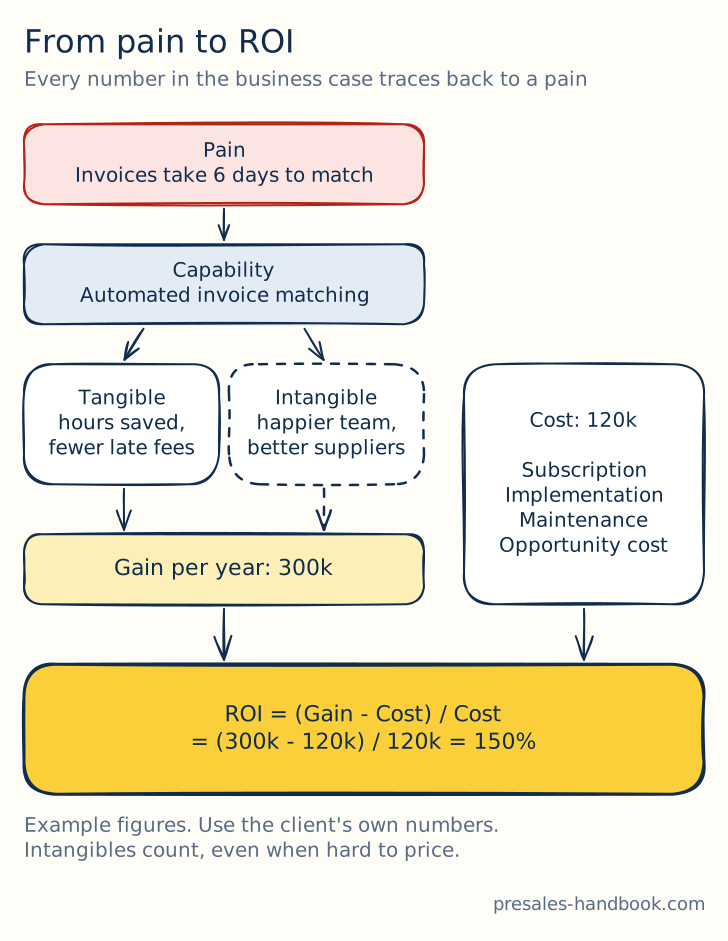
From pain to ROI, with example figures. Use the client's own numbers.
Importance of ROI in PreSales
Evidence-Based Trust: ROI gives concrete evidence of your product's value. That builds trust with potential clients.
Comparative Tool: Clients often compare several solutions. ROI is a key metric for that comparison, because it shows which investment pays off most.
Universal Relevance: Everyone understands ROI. So it brings the interests of many stakeholders at the client together.
Breaking Down ROI
Definition: ROI measures the gain or loss of an investment relative to its cost.
Calculation: The formula is ROI = [(Gain from Investment - Cost of Investment) / Cost of Investment] x 100%. You need to know the net profit and the cost of the investment. That is hard, because there are often hidden costs or unexpected gains.
Determining Costs
Types of Costs: Costs include direct costs and implementation costs. They also include maintenance costs and opportunity costs.
SaaS Business Model: For SaaS solutions, costs are often more predictable. Subscription pricing, lower infrastructure and hardware costs, central upgrades and maintenance, and transparent pricing models all help.
Calculating Net Profit from Investment
Direct Benefits and Operational Efficiency: These include immediate profits and savings, plus efficiency gains from better operations.
Long-Term Strategic Value and Intangible Benefits: These cover market position, brand loyalty and better decisions. They also include brand perception, employee satisfaction and customer experience.
Challenges in Calculating Benefits
Variability and Long-Term Impact: Benefits can vary widely and often take time to show. That is especially true for strategic value and intangible benefits.
External Factors and Implementation Dependency: Outside influences and the quality of the implementation strongly affect the benefits of an investment.
Measurement Complexity: Measuring benefits accurately is hard, especially intangible ones. You need good tools and methods for it.
Value Calculation
A convincing value proposition is a core part of presales. It adds context to the ROI. Beyond the financial return, it describes the tangible and intangible benefits for this client's needs and concerns. This is how you build one:
Address Client Pain Points: Understand the client's challenges. Say clearly how your solution solves them. That shows empathy and a real understanding of their situation.
Balance Tangible and Intangible Benefits: Combine measurable gains, such as saved cost and time, with qualitative ones. Think of a better brand image or higher team morale.
Future-proof the Offering: Show that the solution meets today's needs. Then show how it scales and adapts to future challenges, so it stays relevant.
Differentiate from Competitors: Point out what makes your offering different. Focus on features, support or innovation that set it apart from the alternatives.
Provide Real-world Proof: Back your claims with success stories or quotes from other clients. That gives concrete evidence of the solution's value.
Simplicity and Clarity: Keep the value proposition short and easy to follow. Skip the jargon and make clear statements.
Anticipate and Address Concerns: Answer likely client doubts inside the value proposition. That removes doubts early and shows you did your homework.
Know Your Audience: Tailor the value proposition to the interests and concerns of each stakeholder, such as the CTO and the CFO. That shows you understand their priorities.
Highlight Smooth Integration: Show the client that the solution fits their existing systems and is easy to integrate. That eases worries about disruption or a hard transition.
Emphasize Post-sale Support: Show the client that support, training and resources stay available after the purchase. That proves you care about a long partnership and their success.
Tools & Techniques for ROI & Value Calculation
ROI Calculators: These software tools are built for specific industries or solutions. They calculate the ROI automatically from the values you enter. The ROI Shop is one such tool and can help your company a lot.
Check out our latest software recommendation (opens in a new tab)
Case Studies: Past successful implementations are practical examples of ROI achieved. They carry weight because they are real evidence.
Industry Benchmarks: Industry data and benchmarks give your ROI forecast a realistic frame.
Consulting Companies: Work with consulting companies such as Accenture, KPMG and others to make your ROI bulletproof.
From the blog
- 6 min read
What Humane AI Pin’s Failed Launch Teaches Us About the Need for PreSales
The Humane AI Pin promised a lot and failed at launch. What its story shows about the need for honest presales and real discovery.
Read more - 9 min read
Why Both Buyer and Seller Need to Understand the Selling and Buying Journey
Buyers buy rarely, sellers sell daily. Why guiding buyers through the journey builds confidence and leads to better decisions for both.
Read more - 4 min read
Navigating Competition in the SaaS Landscape: The Battle Beyond Rivals
Your toughest competitor is often doing nothing. How to position against inertia and rivals, and how to read a competitive market.
Read more