

Playbook · Chapter 14
Close Won / Close Lost Lessons learned
How to learn from Close Won and Close Lost deals, which questions to ask after each, and how to run a lessons-learned session that leads to action.
Lessons learned
In PreSales you keep learning, and both wins and losses teach you something. "Close Won" and "Close Lost" deals hold lessons that can change your future strategy and results. Here is how to use them:
Close Won: Celebrating and Understanding Success
A won deal is a reason to celebrate and a good moment to analyze. Knowing why you won matters as much as the celebration. Look at the strategy you used, how well you communicated and how you solved problems. Check how the product or solution met the client's specific needs. Key questions:
- What were the client's main concerns, and how did you address them?
- Which parts of the product or demo landed best with the client?
- How did your relationship and rapport with the client affect the outcome?
Ask the client for feedback. It tells you directly what worked and what to repeat next time.
Close Lost: Learning from Disappointment
A lost deal is disappointing, but it holds a lot to learn. Look at it with an open mind and be willing to question every part of the engagement. Find the point where things went wrong. Key questions:
- At what stage did the client lose interest, and why?
- Were there client concerns or objections nobody answered?
- How did the competitor's offering compare, and what can you learn from it?
A debrief with the client after the decision can teach you a lot. Clients often say openly why they chose another option.
Benefits of the lessons learned
Learning from wins ("Close Won") and losses ("Close Lost") is how a sales team keeps improving. The benefits reach beyond sales, into the whole organization and its client relationships. The main ones:
Performance Improvement: Looking back at wins and losses helps sales teams sharpen their strategy, technique and product knowledge. Their results improve.
Deeper Product/Service Insight: The reasons behind lost deals can reveal limits of the product or service. Those findings guide improvements or new developments that fit the market better.
Client Insights: Each deal teaches you about client preferences, pain points and goals. You can then tailor your approach and meet market demand better.
Forecasting Accuracy: When you see patterns in won and lost deals, you predict future sales results better and plan better.
Competitive Analysis: Knowing why you lost tells you how competitors win. That helps you build counter-strategies.
Team Morale and Growth: Learning from wins and defeats builds a culture of recognition and constructive growth. Team morale and resilience go up.
Marketing Strategy Refinement: Sales results help marketing sharpen its messaging and targeting, so marketing spend works harder.
Stakeholder Communication: A structured analysis of wins and losses gives stakeholders clear data for decisions and planning.
Resource Allocation: Knowing what clients value or criticize guides budgets and resources. You can put money where it drives sales or fixes weak spots.
Strengthening Client Relationships: Asking for feedback after a win or a loss shows clients that you want to understand them and improve.
Innovation and Product Development: Feedback, especially from losses, can point to gaps in the market or in your offering. That drives new development.
Training and Development: Themes that come up again and again in feedback can shape training for the areas where the sales team needs to improve.
Pricing Strategy Optimization: When you understand how price affects buying decisions, you can align pricing with market expectations and the value clients see.
Risk Management: Patterns in losses can show new risks or shifts in market needs early, so you can adjust your strategy in time.
Creating a Feedback Loop: Regular analysis and feedback improve the whole organization over time. Every department can adapt based on what happens in real deals.
How to execute a lessons learned
A lessons-learned process is how you improve after a project or deal. The team repeats what worked and learns from what failed, so the next project goes better. Step by step:
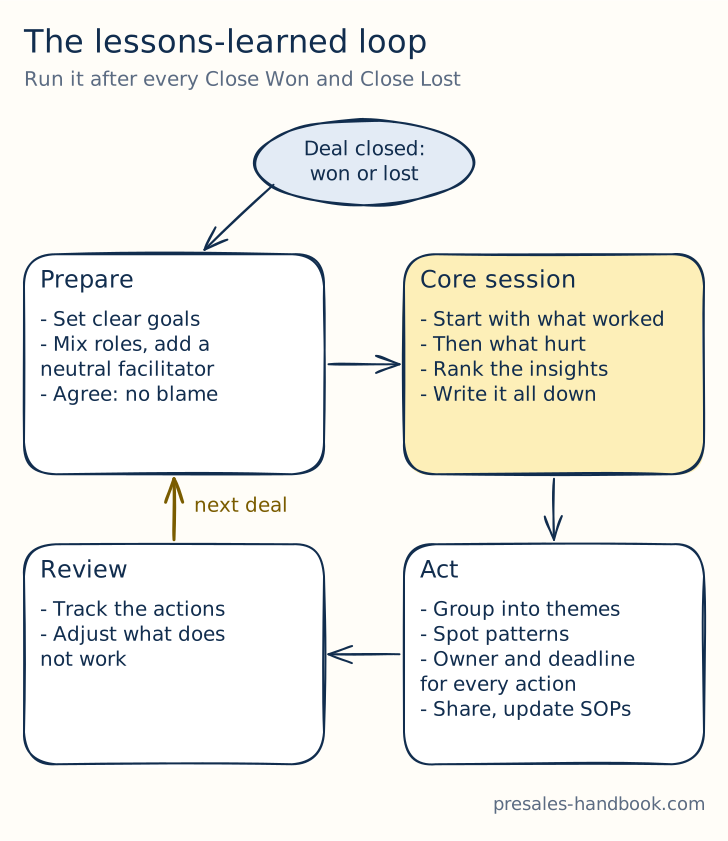
The lessons-learned loop. Run it after every Close Won and Close Lost.
Preparation:
Set Clear Objectives: Decide what the session should achieve: understanding the success, finding areas to improve, or both.
Select Participants: Invite people from different roles and levels of the project to get different views.
Appoint a Facilitator: Choose a neutral person to lead the discussion and keep it balanced and productive.
Brief Recap: Send out a summary of the project's goals, challenges and outcomes to refresh everyone's memory.
Establish Ground Rules: Agree on openness, respect and constructive feedback. Nobody gets blamed.
The Core Session:
Start Positively: Begin with the successes. That lifts morale and names the strategies and strengths that worked.
Address Challenges: Look at what could have gone better. Focus on what to learn for next time, and don't dwell on past mistakes.
Prioritize Feedback: Rank the insights by importance so the amount of feedback stays manageable.
Documentation: Record the insights carefully with suitable tools, so no feedback gets lost.
Post-Session Actions:
Organize Feedback: Sort the insights into themes (e.g., communication, technology) to make them easier to analyze.
Identify Patterns: Look for recurring themes. They can point to systemic problems.
Develop Action Plans: For each important insight, set concrete actions, an owner and a deadline.
Share Findings: Send the lessons learned and action plans to all stakeholders, so the whole organization learns.
Institutionalize Insights: Build the lessons into your standard operating procedures, so past mistakes don't repeat.
Review:
Monitor Progress: Check regularly whether the action plans are carried out and whether they fix the problems.
Adjust Strategies: Be ready to change course based on real-world feedback and on how well the changes work.
Pro Tips for Mastery
To make lessons learned part of how your organization works, use these tips:
Regularize Sessions: Hold lessons-learned sessions at key milestones as well as at the end of a project. Then you capture insights while they are fresh and can improve right away.
Build the Right Environment: Run the sessions where people feel respected, safe and free to speak openly. A supportive atmosphere leads to more honest discussion and better insights.
Utilize External Facilitators: For large projects or topics that need a neutral view, bring in an external facilitator. They guide without bias and keep difficult discussions productive.
Digital Repository for Lessons Learned: Set up one central digital repository for all lessons learned. Then everyone in the organization can use the knowledge, including people who were not on the project. Make it searchable and sort it by project type, outcome and key lesson. That makes it easy to find the right insights for future projects.
Integrate into Onboarding and Training: Add lessons learned to onboarding and training for new employees. New team members learn about past challenges and solutions. It also builds a culture of learning from the past.
Link Lessons to Future Projects: Review the relevant lessons learned at the start of every project planning session. Teams can then spot likely problems early and reuse solutions that worked. That means fewer repeated mistakes and more efficient projects.
Measure Impact of Lessons Applied: Track what happens when new projects apply lessons learned. Use metrics like shorter time to completion, lower costs or better quality. Measuring the impact proves the process works. It also motivates the team to contribute to the knowledge base (opens in a new tab) and use it.
Regular Updates and Maintenance: Keep the lessons-learned repository up to date. After every project, hold a review to add new lessons and update existing entries. Then the repository stays current and useful for all projects.
Reward Contributions: Recognize and reward people who add to the lessons-learned repository. Do it with a mention in meetings, in performance reviews or with a real reward. When a team values knowledge sharing, its lessons-learned sessions get better.
From the blog
- 2 min read
When a House of Cards Collapses: Why Radical Honesty Is a PreSales Superpower
A project I worked on failed badly. What it taught me about radical honesty, and why it is one of the strongest skills in presales.
Read more - 4 min read
The Rare Art of Caring: Why PreSales Must Lead with Craftsmanship and Conviction
In a world of shortcuts, caring about the work is rare. Why presales should lead with craftsmanship and conviction.
Read more - 5 min read
The Power of Curiosity in PreSales: Why It’s Your Greatest Asset
Curiosity drives better discovery, stronger relationships, sharper demos and calmer objection handling. Why it is a core presales skill.
Read more
In the course
- The PreSales MindsetMembers only
- Core Metrics for PreSalesMembers only
- Documentation & Knowledge SharingMembers only