

Career and leadership · Chapter 1
PreSales Leadership
What it takes to lead a presales team: the six areas of the job, team sizing and SE:AE ratios, org models, a shared playbook and your first 90 days.
Key takeaways
- Leading presales covers six areas: people, capacity, structure, standards, numbers and partners.
- Size the team from deal demand and hours per deal. Use SE:AE ratios only as a cross-check.
- Pick an org model that fits your sales motion, then fix its weak spots with a playbook and a clear RACI.
What presales leadership covers
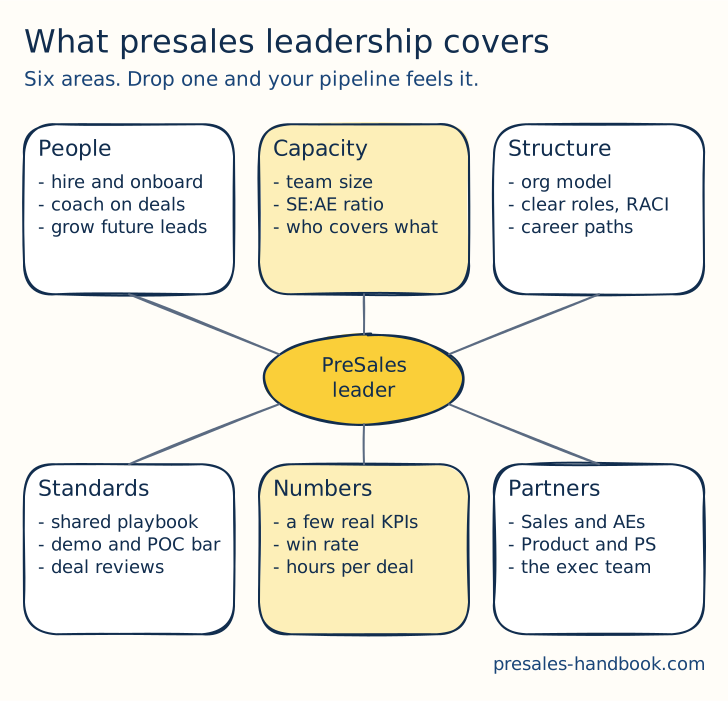
Leading presales is more than being the best SE with a bigger calendar. The job has six areas. Neglect one, and sooner or later your pipeline feels it.
People: You hire, onboard and coach. You grow the SEs you have and the leaders you will need next.
Capacity: You decide how many SEs you need, how they split across the AEs and who covers which deals.
Structure: You pick the org model, write down clear roles with a RACI and show people where their career can go.
Standards: You keep one playbook, set a quality bar for demos and POCs (opens in a new tab) and run regular deal reviews.
Numbers: You track a handful of KPIs that show impact, such as technical win rate and hours per deal. The KPI chapter (opens in a new tab) goes deeper.
Partners: You work with Sales, Product, professional services and the exec team. Most presales problems are handoff problems between these groups.
The rest of this chapter walks through these areas. Team sizing and org models come first, because they shape everything else.
Challenges
PreSales leaders juggle technical depth, client knowledge and sales sense in a market that keeps changing. The main challenges:
Resource Allocation: Spreading the team across many products and client needs takes deep knowledge of the market, the products and what your organization can do.
Skill Gap Identification: Technology changes fast, so the team needs constant upskilling to stay current and ready for what comes next.
Maintaining Consistency: Clients should get the same quality in every demo, pitch and consultation. That consistency shows how seriously the organization takes its work.
Inter-departmental Synergy: Sales pushes hard, and Product worries about what is feasible. You have to steer between both and keep a PreSales strategy that is solid and achievable.
Evolving Client Landscape: Client demands and industries change. You need to see changes coming and adjust your PreSales strategy early. Done well, this makes your organization a thought leader.
Strategies
Leading PreSales well takes vision, a team that works together and the ability to plan ahead. These strategies help:
Regular Team Meetings: Meet weekly or every two weeks to solve problems, share insights and build team spirit. People feel valued and connected.
Focused Training and Development: Invest in ongoing learning through workshops, certifications and sessions with experts. That keeps the team's knowledge current.
Constructive Feedback and Data-Driven Decisions: Set up feedback that helps people grow. Base your decisions on metrics, and use solid data to adjust strategy and resource allocation.
Stakeholder Communication: Keep in close contact with sales, product development and executives. Then your PreSales strategy fits the wider company goals.
Direct Client Engagement: Talk to clients yourself. You learn their needs and challenges firsthand, and clients trust the organization more.
Effective Time Management: Make time for strategic planning, the team and your own development. With so many duties, this keeps your time productive.
Mentorship Programs: Pair experienced people with new team members. Skills transfer faster, onboarding gets quicker and the team supports each other.
Scenario Planning: Think about how the market might shift and prepare for different scenarios. The team stays agile and ready.
Innovation Culture: Encourage people to try new tools, methods and solutions. The team gets better at handling change.
Team sizing and SE:AE ratios
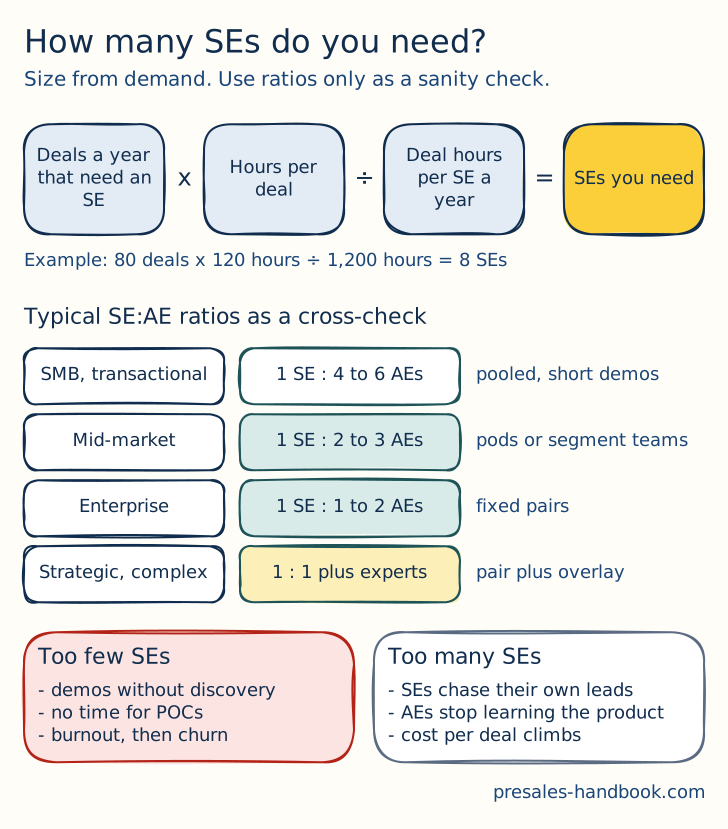
"How many SEs do we need?" Every presales leader gets this question. It usually arrives right after the budget is closed. Answer it from deal demand.
Start from deals: Count the deals a year that really need an SE. Multiply by the hours an average deal takes. Divide by the deal hours one SE has in a year. That is your number.
Be honest about hours: An SE has about 1,600 working hours a year. Training, internal meetings, enablement and admin eat a big share of them. Plan with roughly 1,200 hours for deals. If your SEs also build demo systems or write every RFP (opens in a new tab) alone, go lower.
Measure hours per deal: A small deal with one demo may take 30 hours. A complex deal with workshops, a POC and an RFP can take 200 hours or more. Split your pipeline by deal type and use a separate number for each.
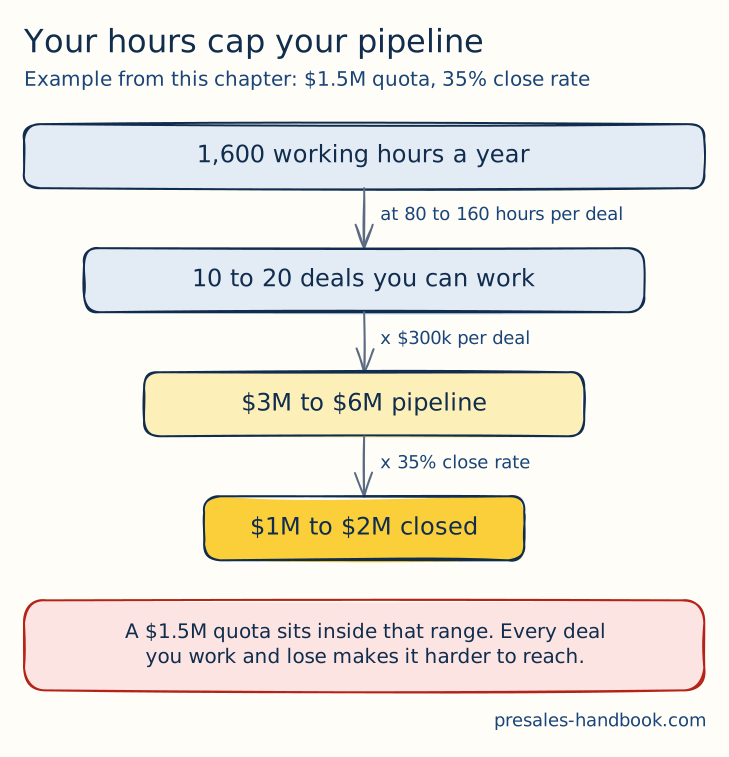
The same maths works for a single SE. It also shows why hard qualification protects your team:
Use ratios as a cross-check: The SE:AE ratio is the shorthand everyone quotes. Typical ranges are one SE for four to six AEs in fast SMB sales and one for two to three in mid-market. Enterprise teams get close to one to one. Complex, strategic deals often need a dedicated SE plus specialists. Your demand model and the ratio may disagree a lot. Then look closer. Either your deal mix is unusual or your hours per deal are off.
Watch the warning signs: Too few SEs shows up as demos without discovery and POCs you have to refuse. Then your best people leave. Too many SEs looks different. SEs start chasing their own leads. AEs hand over every question and stop learning the product. Cost per deal climbs.
Review twice a year: Re-run the numbers when the sales plan changes, a product launches or you enter a new segment. Hiring and ramp-up take months. Plan ahead, or you will be short exactly when the pipeline grows.
Presales org structures
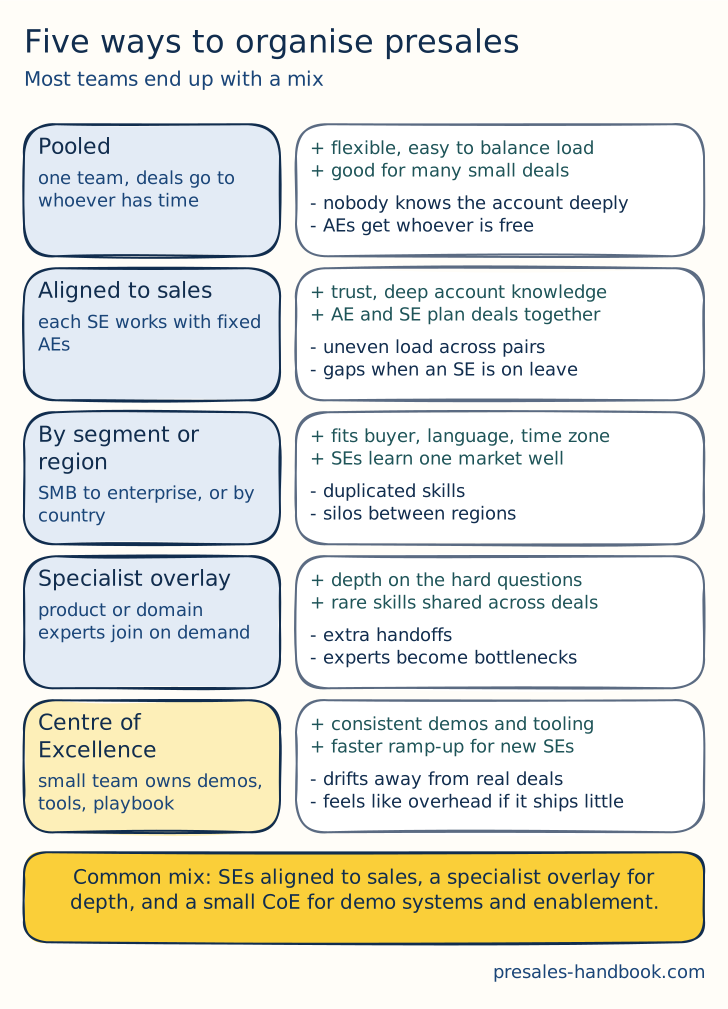
There is no perfect org chart. Each model trades flexibility against depth. Pick the one that fits your sales motion, then fix its weak spots.
Pooled: One team, and deals go to whoever has capacity. This works well for many small, similar deals and for young teams. The downside is that nobody knows the account deeply. AEs also feel they get "whoever is free". A clear intake process and a shared account note help.
Aligned to sales teams: Each SE works with a fixed group of AEs, often as a pod. Trust grows, and the SE knows the accounts and the people. The load gets uneven, though. One pod drowns while another is quiet, and holidays leave gaps. Keep a small buffer or allow help across pods.
By segment or region: SEs specialise in SMB, mid-market or enterprise, or in a country and its language. This fits the buyer's world and time zone. The cost is duplicated skills and silos. Regions start to build their own demos and their own truth. One playbook and one shared demo library stop that.
Specialist overlay: Product or domain experts join deals when the questions get deep. Think integration, security or a niche module. You get depth without making every SE an expert in everything. But every overlay adds a handoff, and good specialists turn into bottlenecks. Set clear entry criteria and book them like the scarce resource they are.
Centre of Excellence (CoE): A small team owns demo systems, tools, templates, the playbook and enablement. Quality gets consistent, and new SEs become productive faster. The risk is distance. A CoE that stops joining real deals builds things nobody uses. Let CoE members spend part of their week on live deals.
How to choose: Ask three questions. How many deals do you run, and how similar are they? How complex is the product? How much does the customer expect one familiar face? Most teams end up with a mix: SEs aligned to sales, a specialist overlay for depth and a small CoE for demo systems. My advice: start simple, and add a layer only when a real problem asks for it.
Keeping the team stable
PreSales changes fast, and a stable team keeps its productivity and morale through those changes. Stability helps the team work in sync, lifts morale and keeps client communication consistent. Clients need that consistency to build trust and long-term relationships. Several things threaten stability: fast-moving technology, high turnover in the industry and frequent strategy changes. Poor alignment with other departments and swings in sales results add to it. What helps:
Continuous Training: Give the team the latest skills and knowledge so it keeps up with the industry.
Open Communication: Make it safe for team members to raise concerns and ask questions. Be open about career paths too.
Inter-Departmental Collaboration: Encourage work across departments, so strategies stay aligned and friction drops.
Mental Health and Well-being Initiatives: Offer wellness programs and take your team members' overall well-being seriously.
Celebrate Team Achievements: Recognize successes. It lifts morale and gives people a sense of purpose and belonging.
Feedback Mechanisms: Ask the team for feedback and act on it. That improves the work and shows people they are valued.
Develop a PreSales Playbook
A PreSales Playbook is a manual that guides your team through different client situations. It helps them use proven practices in every interaction. It describes the methods, processes and core knowledge for working with clients. Its goal is consistent, precise and high-quality work that reflects how your organization does PreSales.
Key components of developing a PreSales Playbook include:
Defining the PreSales Vision: Set the core objectives of the PreSales team. They guide the playbook's content and strategies.
Detailing PreSales Processes: Write down concrete steps for each part of the PreSales cycle, from first outreach to feedback after the engagement. Everyone then knows what to do.
Incorporating Best Practices and Scenarios: Add real-world scenarios and best practices that show how to handle common client concerns and objections.
Highlighting Tools and Resources: List the digital tools and resources PreSales can use, with guidelines on how to use them with clients.
Emphasizing Continuous Learning: Make ongoing education part of the playbook, so the team keeps learning.
Feedback Mechanisms and Iteration: Add channels for feedback, so the playbook keeps improving. It becomes a shared document that grows with the team's experience.
Encouraging Customization: Leave room to adapt. The playbook gives structure, but each client's needs may call for a tailored approach.
Cultivating the Next Generation
Growing the next generation of PreSales leaders keeps the team growing and innovating. Leading PreSales takes technical and product knowledge, and also vision, strategic planning and the ability to inspire. A leader guides the team through challenges and opportunities.
Strategies for nurturing future PreSales leaders include:
Mentorship: Personal guidance from experienced mentors speeds up growth. Mentees get a safe space to discuss, learn and build confidence. Mentors benefit too, because they reflect on their own work and grow.
Leadership Workshops: Targeted training covers strategic thinking, team motivation, decision-making and conflict resolution. It gives skilled PreSales people a new view of leadership and prepares them to lead.
Cross-functional Projects: Projects with other departments show PreSales people how the whole organization works. Leaders need that broad view.
Ownership and Responsibility: Give PreSales people ownership of projects or areas. That tests and sharpens their decision-making and accountability. It prepares them for bigger roles.
Networking: Encourage people to attend industry events, seminars and forums. They see new trends, strategies and points of view, which widens their strategic options.
Soft Skill Development: Train communication, negotiation, empathy and teamwork. Good leaders know how to work with people and motivate them.
Meetings & Workshops
Meetings and workshops are a core part of PreSales work. They build skills, align strategy and build relationships across departments. Regular contact with sales, professional services and product management keeps PreSales connected to them. This helps avoid strategies that clash and goals that conflict.
Key strategies for effective meetings and workshops include:
Quarterly PreSales Meetings: Give the PreSales team dedicated time to discuss challenges, share experiences and learn from guest speakers or industry experts. This builds the team's knowledge and shows that the organization invests in them.
PreSales and Sales Collaboration: Hold meetings between PreSales and Sales twice a year. Both sides exchange feedback, strategies and insights, agree on shared goals and clear up differences in strategy.
Appreciation and Recognition: Recognize individual effort and results with real rewards, such as weekend trips or luxury items. That motivates people and sets a high standard for the team.
Enhanced Sales Kick-off: Add regular strategy sessions to the annual sales kick-off. Then you can adjust strategy as the market and client needs change, and it stays relevant.
Workshops with Product Teams: Run workshops with product management, development and marketing. PreSales stays up to date on how the product develops and what the market says. Both sides learn from each other. PreSales passes on feedback from the field, and the product teams share upcoming features and the reasons behind them.
Client-Focused Product Sessions: Add sessions that look directly at client requirements. They help the product strategy rest on real market feedback instead of assumptions.
Survey
Surveys help PreSales and Sales teams in technology sales understand each other and stay aligned. People can share insights and feedback, and the results show what needs to improve. Both teams can then work together toward their shared goal: more sales.
Key Aspects of Using Surveys Include:
PreSales Team Focus: Surveys can check whether resources are adequate and how well the team works with Sales. They also collect product feedback straight from the client front line.
Sales Team Focus: Surveys for the Sales team can measure how useful PreSales support is. They show where Sales needs training to understand the products or solutions better. They can also reveal what sales collateral would improve client presentations.
Crafting Effective Surveys Involves:
Clarity in Questions: Keep questions simple and unambiguous, so the answers are clear and usable.
Inclusion of Open-ended Questions: Open questions let people give detailed feedback that structured data would miss.
Anonymity for Respondents: Anonymous surveys get more honest and candid answers.
Acting on Feedback: What matters most is what you do with the feedback. Share the results with both teams, discuss what they mean and agree on concrete plans for the problem areas.
Onboarding and Training
Onboarding and training set new PreSales people up for success and help them fit into the company. Besides company policies, onboarding covers the culture. New hires match their skills and expectations to the company's goals and get ready to work with clients.
Key Elements of Onboarding and Training Include:
Company Culture Integration: New team members should understand the company's mission, values and culture, so they feel they belong.
Cross-functional Understanding: Meeting other departments shows how the company works and helps new people understand their own role.
Product Training: New hires need deep knowledge of the product's features, market position and value proposition (opens in a new tab) to present it well to clients.
Role-playing and Simulations: These help new people practice client conversations, build their communication approach and prepare for difficult situations.
Continuous Learning: Certifications, workshops and courses keep PreSales people up to date on technology and market trends.
Feedback and Mentorship: Regular feedback and mentoring help new members settle in, improve their approach and feel supported.
Real-world Exposure: Step-by-step involvement in real client conversations gives new people experience and confidence.
Soft Skills Development: Training in communication, empathy, negotiation and client management rounds out their skills.
Ongoing Support: Regular check-ins let you adjust training to the person and the industry, so they keep growing.
RACI Matrix
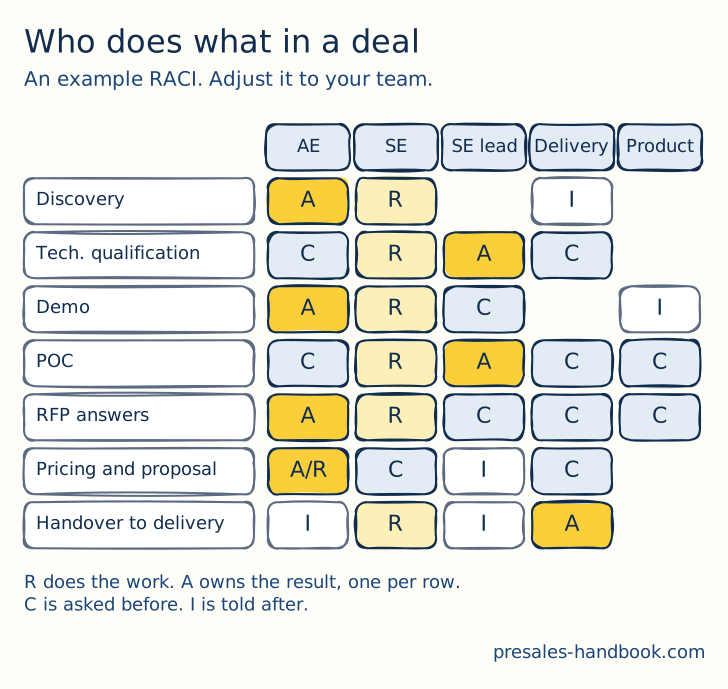
The RACI Matrix is a project management tool that works especially well in PreSales. It clarifies roles by sorting everyone involved into four types: Responsible, Accountable, Consulted and Informed. It makes tasks from product demos to stakeholder communication simpler. Resources go where they are needed, and tasks overlap less.
Responsible: The people who do the task.
Accountable: The person or group with final oversight and decision authority for the task.
Consulted: Subject matter experts whose input is needed for decisions or actions.
Informed: People who need updates on actions or outcomes but do not work on the task.
Implementing a RACI Matrix involves:
Listing PreSales Processes: Identify all tasks associated with PreSales activities.
Identifying Stakeholders: Determine who is involved in these tasks.
Assigning RACI Roles: For each task, assign roles to stakeholders as Responsible, Accountable, Consulted, or Informed.
Benefits of Implementing RACI in PreSales include:
Clarity in Roles: Every team member knows their responsibilities and how they fit into the team's work.
Resource Efficiency: Tasks get done well, and resources are spread sensibly.
Improved Communication: Information reaches the right people, which makes coordination easier.
Reduced Redundancy and Missed Tasks: Less duplicated work, and no critical task gets overlooked.
Enhanced Accountability: Each task has a clear owner, so people engage more and take responsibility.
Challenges and Solutions:
Avoid Overcomplication: Start with the core tasks and roles, and add more only when needed.
Regular Reviews: Update the matrix as the team and the project scope change.
Promote Open Dialogue: Encourage the team to discuss unclear points until every role is clear.
First 30-60-90 Days as a leader
Your first 90 days as a PreSales leader matter. They have three phases: Observation, Analysis and Implementation.
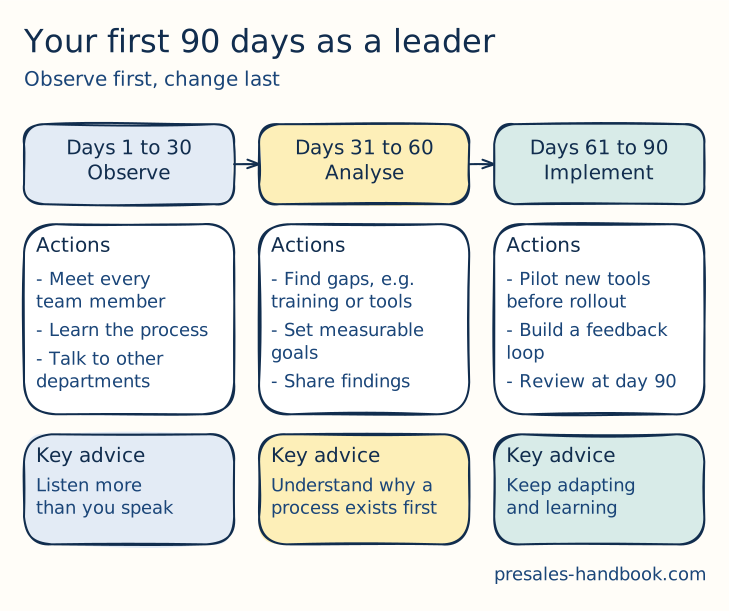
First 30 Days: Observing and Understanding
Objective: Get to know the team, the processes and the current challenges.
Actions:
- Meet each team member to learn their strengths, concerns and goals.
- Look into the PreSales process to understand the workflows and how people work together.
- Talk to leaders from other departments to see the whole organization.
Key Advice: Listen more than you speak. That is how you learn what matters.
Next 60 Days: Analysis and Strategy Formulation
Objective: Analyze what you learned, find the gaps and set strategic objectives.
Actions:
- Identify areas needing improvement, such as training needs or tool enhancements.
- Set clear, measurable goals for team performance and process optimization.
- Hold team meetings to share your findings and ask for feedback, so everyone feels part of the change.
Key Advice: Understand why the current processes exist before you make major changes.
Final 90 Days: Implementation and Feedback
Objective: Put the strategies into practice and set up a feedback loop for continuous improvement.
Actions:
- Pilot new strategies or tools to test them before a wider rollout.
- Set up solid feedback to track the impact of changes and adjust where needed.
- Build strong team relationships through team-building activities and open communication.
- Run a full review at the end of the 90 days to check what worked and adjust.
Key Advice: Be ready to adapt and keep learning. Leadership keeps changing, and success depends on how well you respond to new challenges and opportunities.
From the blog
- 2 min read
When a House of Cards Collapses: Why Radical Honesty Is a PreSales Superpower
A project I worked on failed badly. What it taught me about radical honesty, and why it is one of the strongest skills in presales.
Read more - 4 min read
The Rare Art of Caring: Why PreSales Must Lead with Craftsmanship and Conviction
In a world of shortcuts, caring about the work is rare. Why presales should lead with craftsmanship and conviction.
Read more - 5 min read
The Power of Curiosity in PreSales: Why It’s Your Greatest Asset
Curiosity drives better discovery, stronger relationships, sharper demos and calmer objection handling. Why it is a core presales skill.
Read more
In the course
- The PreSales MindsetMembers only
- Core Metrics for PreSalesMembers only
- Documentation & Knowledge SharingMembers only