

Playbook · Chapter 11
Objection Handling
A practical framework for handling technical and functional objections, plus how to deal with the ones that keep coming back.
Overview of Objections
Objection handling in presales needs both strategy and empathy. You take the client's concerns seriously and work to resolve them. Objections come in many forms: technical, functional, unspoken or stated outright. Each one is a chance to sharpen your pitch and fit the solution closer to the client's needs. It starts with active listening, so you understand the objection fully. Then you show empathy and acknowledge the client's view. Probing questions uncover the real cause, so your answer hits the core concern. The answer might be an open talk about a product limit, a workaround or a planned enhancement. If an objection persists, a trial, a subject matter expert or a follow-up meeting often helps. The right mindset draws on product knowledge, market awareness and active listening. Build it, and you handle objections in a way that keeps the client at the centre.
Framework for Handling Objections
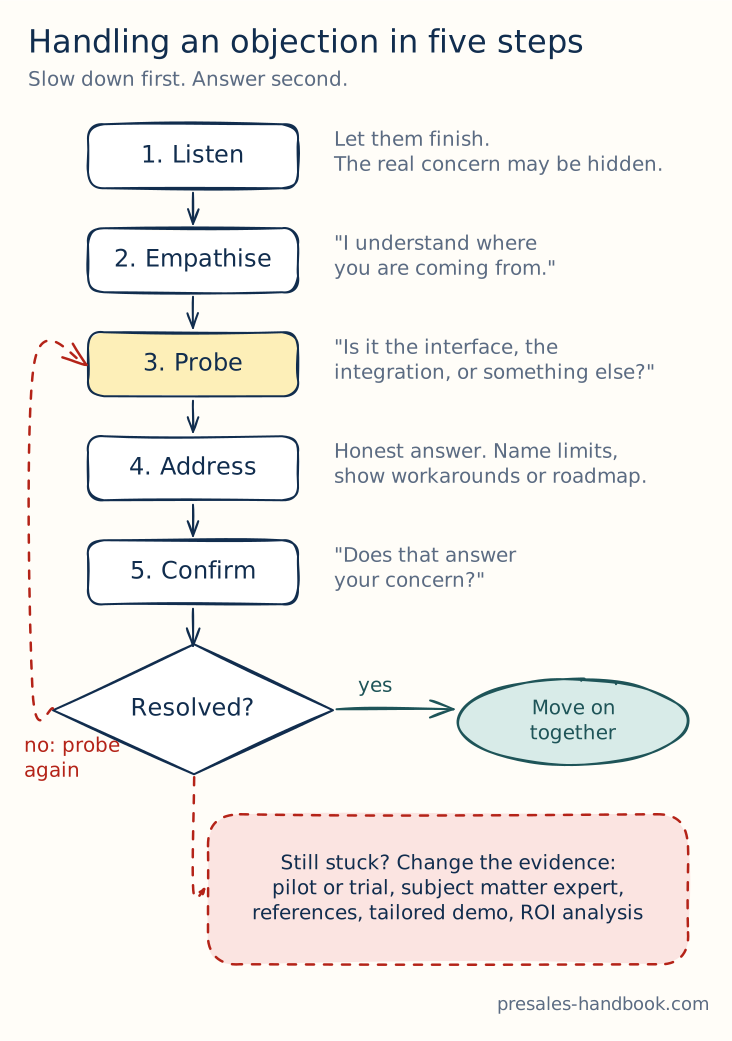
Handle objections in five steps. If one persists, change the evidence.
Listen Actively: Before responding, ensure you fully understand the objection. Occasionally, the real concern is not immediately obvious.
Empathising: Recognising the validity of their concerns. This can be as simple as saying, "I understand where you are coming from."
Ask Probing Questions: Dive deeper into understanding the roots of the objection. For instance, if a prospect states that the solution seems too complex, probe further. Is it the user interface, integration process, or something else? (Rackham 1995)
Address the Objection: Provide a direct, honest response. If it is a known limitation, acknowledge it and then discuss workarounds or upcoming features that might address it.
Confirm Resolution: After addressing the objections, check in with the prospect. Ask if your response alleviates their concerns or if they need further information.
Common Technical Objections
"Your solution does not integrate with our existing systems."
Address the current integration that your product offers.
Discuss potential custom integration possibilities or middleware solutions.
Highlight upcoming integration features on your roadmap.
"We have heard your solution has performance/scalability issues."
Share testimonials or case studies of clients with similar scales.
Discuss any recent performance upgrades or optimisations.
Offer a performance test or PoC (opens in a new tab) to demonstrate scalability.
"The security features seem lacking."
Detail your solution's security measures, certifications, and compliance standards.
Share third-party security audits or assessments.
Discuss any upcoming security enhancements.
Common Functional Objections
"The price is too high."
Highlight the solution's value proposition (opens in a new tab) and potential ROI.
Explore potential discounts or bundled deals.
Discuss phased implementation to spread costs.
"We are already working with another vendor."
Look into pain points or unmet needs with their current vendor.
Show the unique features and advantages of your solution.
Offer a side-by-side comparison or a pilot program.
"It seems like a long and complex implementation process."
Provide a detailed implementation timeline with milestones.
Highlight post-sale support and training.
Offer references from clients who have had smooth implementation.
Handling Persistent Objections
Some objections persist despite your best efforts. In these cases:
Propose a Pilot or Trial: Let prospects try the solution themselves, so they can test their concerns.
Engage Subject Matter Experts: Bring in specialists from your team who can go deep on specific concerns.
Request a Follow-Up: Perhaps the timing is wrong, or the client needs more internal discussion. Schedule a follow-up to revisit the concerns.
Use Success Stories and Testimonials: Share stories from customers who had similar objections and saw good results after implementation. That builds credibility and reassures the prospect.
Offer Custom Demonstrations: Focus the demo on the areas of concern. It shows you take their specific needs seriously, and they see the solution in action.
Provide Detailed ROI Analysis: Offer a return on investment (ROI) or cost-benefit analysis for their specific case. It puts a number on the value and can shift the focus from cost to gain.
Utilize Data and Case Studies: Present data, benchmarks or case studies. They show how your solution solved similar objections or challenges before.
Collaborative Problem Solving: Invite prospects to a joint working session. Both sides list possible objections and solutions together. That feels more like a partnership.
Increase Touchpoints with Different Stakeholders: Sometimes objections persist because not all decision-makers or influencers are on board. Talk to more stakeholders, so you hear and answer the different concerns across the organisation.
Clarify Implementation and Support: Restate the support available during and after implementation. Describe the training, resources and ongoing support that keep the transition and operation smooth.
Adjust Proposal Terms: Be flexible on contract terms, such as payment schedules, scaling options or customisation. That can overcome financial or strategic objections.
Reiterate Long-Term Benefits and Vision: Point to the long-term strategic benefits of your solution, including the product roadmap. Show how it fits industry trends and prepares the client for future challenges.
Partnership with Consulting Firms: Mention partnerships with reputable consulting firms like Accenture, KPMG or others. Explain the extra expertise and reassurance they bring, especially for large or complex deployments.
Cultivating an Objection Mindset
Stay Updated: Refresh your knowledge of the product, market trends and competitors regularly.
Practice Active Listening: It is how you really understand objections. (Rosenberg) (opens in a new tab)
Role Play: Practise objection handling with colleagues to sharpen your approach.
Encourage a Curiosity-Driven Approach: Treat each objection as a chance to understand the client's needs better. Encourage the team to meet objections with curiosity and a wish to learn. That leads to better conversations and better solutions.
Develop Empathy Skills: Objections have emotional and logical reasons. Empathy helps you understand both. Training in emotional intelligence helps the team connect with clients and answer both the emotional and the business concerns.
Incorporate Feedback Loops: Hold regular feedback sessions. Team members share experiences, techniques that worked and areas to improve. That way you keep refining your approach and learn from real cases.
Encourage Strategic Thinking: Train the team to think strategically about objections. That means understanding the business needs or constraints behind them. Training in business analysis and strategic planning helps.
Promote Collaboration Across Departments: Some objections are best answered with input from other departments, such as Product Development, Marketing or Customer Support. Make sure the sales team feels supported and can reach that expertise easily when needed.
From the blog
- 5 min read
What PreSales Can Learn from The Wolf of Wall Street
The Wolf of Wall Street is about bad ethics, but also about storytelling and conviction. What presales can take from it and what to leave.
Read more - 2 min read
Buyers Don’t Hate Salespeople! They Hate Being Sold To
Buyers want guidance, not pressure. How sales and presales can help buyers decide instead of pushing them toward a signature.
Read more - 4 min read
Navigating Competition in the SaaS Landscape: The Battle Beyond Rivals
Your toughest competitor is often doing nothing. How to position against inertia and rivals, and how to read a competitive market.
Read more