

Playbook · Chapter 5
Opportunity Scoping Document (OSD)
The Opportunity Scoping Document captures what you learned in discovery. How to structure it, write it and use it to qualify.
The Opportunity Scoping Document (OSD)
The Opportunity Scoping Document (OSD) is a key tool in presales. It records what you learned in the discovery sessions with a prospect. A good OSD goes well beyond a summary. It is a full record of what seller and client understand and have agreed on together.
This is what a good OSD does and how you write one:
Two Purposes: For the seller, the OSD is the plan for tailoring strategy, pitches and demos to what discovery showed. For the client, it is proof that the seller has understood their needs and intends to meet them.
Clarity and Detail: An OSD captures the details of the discovery conversations in a compact form. It can be a document, a PowerPoint deck or a summary in the CRM. It must reflect exactly what was discussed and agreed, so that everyone can read it and act on it.
Structured Content: A good OSD states the goals of the discovery session. It then describes the prospect's current situation in detail: challenges, needs, ambitions and constraints. Finally, it links the proposed solutions directly to these findings, so the approach clearly fits the client's circumstances.
Next Steps: The OSD also sets out next steps, timelines and expectations. That way both sides agree on what happens next.
Empathy and Precision: Writing an OSD takes care with details and real understanding of the prospect's point of view. Then the document matches what the prospect expects and wants.
Transparency and Validation: When you share the OSD with the prospect, you are open about what you captured, and they can confirm it. This reduces misunderstandings and strengthens the relationship.
Benefits Across the Company: The OSD is written for the client, but many teams in your company use it. Services use it for estimates, product management for alignment, leadership for presentations, and the implementation team for the handover.
The Importance of an OSD
The Opportunity Scoping Document (OSD) connects what you learned in discovery with the next steps of the sale. Those steps include demos, proposals and negotiations. The OSD makes sure these insights carry through and get used for the whole relationship with the prospect.
Proof of Understanding: The OSD shows in concrete terms that the sales and presales team understand the prospect's needs, challenges, ambitions and constraints. It interprets what you heard in detail. The prospect sees that you have taken their story on board. This builds trust and credibility, which a partnership built on value needs.
Base for Later Meetings: The OSD is the reference for every later interaction, so each one builds on the last and stays relevant. It helps you tailor demos and proposals to the needs and goals from discovery. That shows the prospect you are serious about a tailored solution.
Internal Consistency: The OSD is the single source of truth for the sales team. It keeps everyone coordinated and consistent. Because it describes the prospect's context in detail, every team member shares the same understanding and approach, whatever their role.
Structuring Your OSD
An OSD tells the whole story of the opportunity so that vendor and prospect understand each other and agree.
These are its main sections and what each one is for:
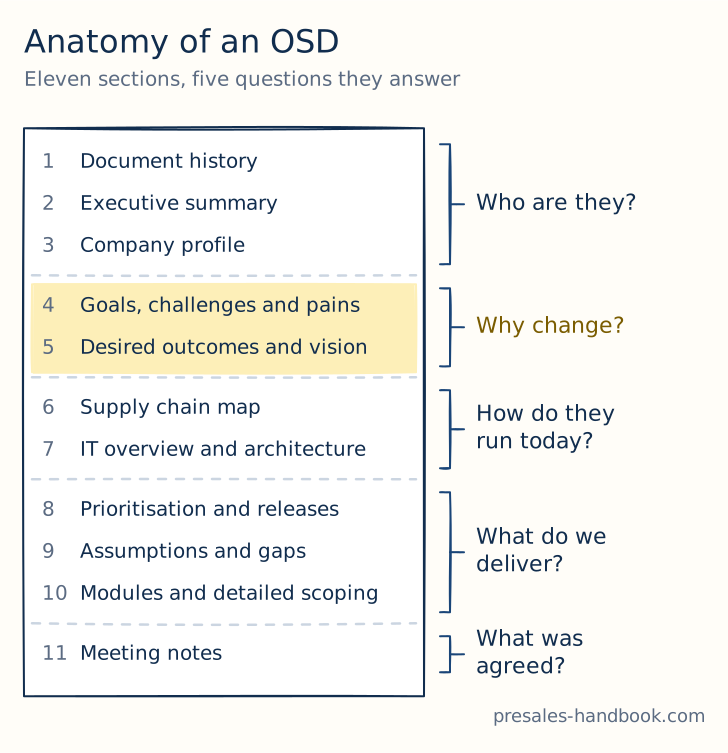
The OSD sections and the question each group answers.
Document History: The cover page. It tracks the versions, changes and contributors, so it is clear how the document has developed.
Executive Summary: An overview of the company, its main challenges and how your solution solves them. This section sets the tone and previews the rest of the document.
Company Profile: A closer look at the prospect's organization. Besides the basic facts, it covers the company culture, key stakeholders, organizational structure and market position.
Goals, Challenges, and Major Pain Points: The critical issues the prospect faces, what they lead to and their likely root causes. This shows that you understand the problem, and it prepares the ground for your solution.
Desired Outcomes and Vision: Here the focus moves from challenges to ambitions. The section lists the prospect's goals and success metrics and describes their future with your solution.
Supply Chain Map: A visual or written picture of the prospect's operations. It shows inefficiencies and critical points.
IT Overview and Architecture: A summary of the current technical setup, how the systems interact and what to consider about legacy systems.
Project Prioritisation and Business Releases: The order in which the solution is rolled out or the challenges are tackled. It gives a view of timelines and resource planning.
Assumptions & Gaps: The assumptions made during scoping, written down. This prevents confusion later and keeps all parties aligned.
Modules & Detailed Scoping: The specific functions of your solution that meet the prospect's needs, matched to their challenges.
Meeting Notes: Discussions, decisions and action items. They keep the sales process moving.
Interested in a Template?
The OSD template is a free download.
Templates and downloads (opens in a new tab)
Crafting an Impactful OSD
A strong OSD takes more than writing down what was said in discovery. The document has to land with the prospect, communicate clearly and stay in their memory.
This is how you get there:
Interpret, Do Not Transcribe: Do not just record what people said. Interpret and summarize the needs, worries and goals behind their words. For example, a simple remark about delivery problems becomes a fuller description that shows the effect on revenue and customer satisfaction.
Use Visual Aids: People take in pictures easily. Diagrams, flowcharts or tables make complex processes simpler and break up long text. Visuals also get detailed ideas across faster, and people remember them better.
Keep It Clear: Technical jargon is tempting, but the OSD should be simple and clear. Plain, concise language makes the document easy to read and useful. Every term should have a purpose and capture the core of the discussion accurately.
Validate It: An OSD only works if it matches how the prospect sees things and what they expect. Check the key points of the document with the prospect. That confirms you understand each other, and it strengthens trust and collaboration. The prospect also becomes an active part of the sales process.
Using the OSD Effectively
The OSD does several jobs in the presales process:
Preparation and Continuity: The OSD keeps the prospect's challenges, goals and particular details in front of you. All proposed solutions and strategies then stay close to the prospect's needs. The sales conversation stays continuous, consistent and relevant, and the vendor's understanding of and connection to the prospect grow.
Guide for Internal Strategy and Customization: Inside your company, the OSD guides the different teams with documented insights into the prospect's challenges and needs. It helps you tailor custom features and focus demos on what matters most. It also gives every team the same picture, from marketing to product development. Their work then stays aligned with the prospect's situation.
Feedback Mechanism: The OSD is a living document that changes as the engagement develops. Ask the prospect regularly to review it and give feedback. That keeps it accurate and up to date with the relationship. The feedback also shows you how the prospect's priorities and preferences shift. Those signals matter for the current deal and for wider strategic decisions.
Common Pitfalls
Several common mistakes can make an Opportunity Scoping Document (OSD) less useful.
Here they are, with ways to avoid them:
Generic Content: A one-size-fits-all template can produce an OSD without the depth and detail the prospect needs to recognize their own situation. Customize the OSD for every prospect instead. Look at their specific challenges, motives and goals, so the document reflects their situation accurately and uses their language.
Too Much Detail: Being thorough is good. But too much detail can overwhelm readers and hide the critical information. Be selective and include only the insights that help explain the prospect's challenges and ambitions. Keep the information clear and concise and focus on what is relevant and has an effect. That keeps the OSD useful and manageable.
A Document That Stands Still: Business relationships change, and so do needs and priorities. An OSD that never changes misses this. Review and update it regularly, and add the prospect's feedback so it shows the current state of the engagement. Then it stays a current and accurate guide for presales and for the prospect.
Example of an OSD
If you want an OSD template with full guidance on how to adapt it, take the course:
Templates & Materials (opens in a new tab)
PreSales Perspective
In presales, you cannot do without the OSD. It links the discovery phase to all later sales activities. It records what seller and client understand and have agreed on. And it shows that both sides share a clear view of the needs and the solution.
Templates for this chapter
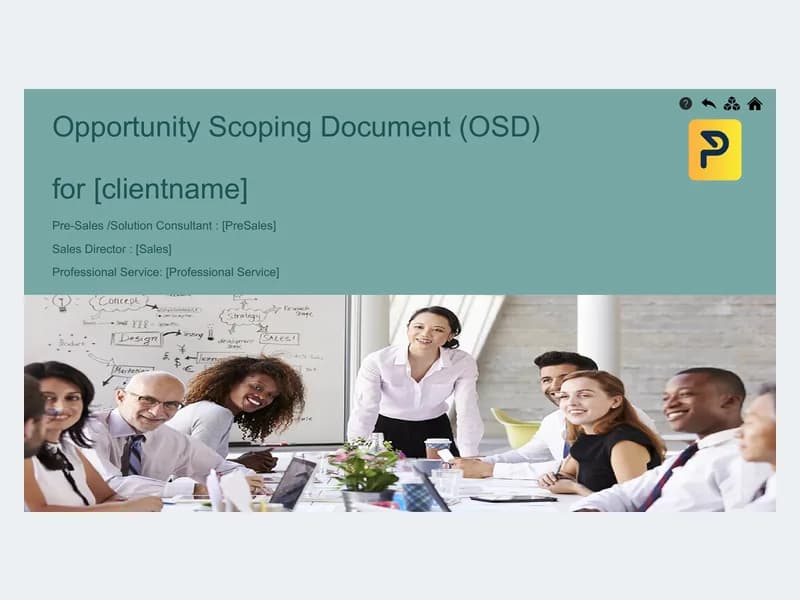 Included with the coursePPTX · 3.1 MB
Opportunity scoping document
Summarise what you learned in discovery and agree the scope before the demo.
From the blog
- 5 min read
The Power of Curiosity in PreSales: Why It’s Your Greatest Asset
Curiosity drives better discovery, stronger relationships, sharper demos and calmer objection handling. Why it is a core presales skill.
Read more - 5 min read
Why Salespeople Need PreSales Skills and How to Acquire Them
Salespeople who learn presales skills win more trust and more deals. Which skills matter most and how to learn them.
Read more - 2 min read
Buyers Don’t Hate Salespeople! They Hate Being Sold To
Buyers want guidance, not pressure. How sales and presales can help buyers decide instead of pushing them toward a signature.
Read more
In the course
- Functional & Technical DiscoveryMembers only
- Functional & Technical Discovery Best PractisesMembers only
- The Discovery Summary / Opportunity Scoping Document (OSD)Members only