

Playbook · Chapter 10
RFX Process: RFI, RFP and RFQ Explained
RFX is the umbrella term for the RFI, RFP and RFQ. What each request means, when to bid or walk away, and how presales writes answers that win.
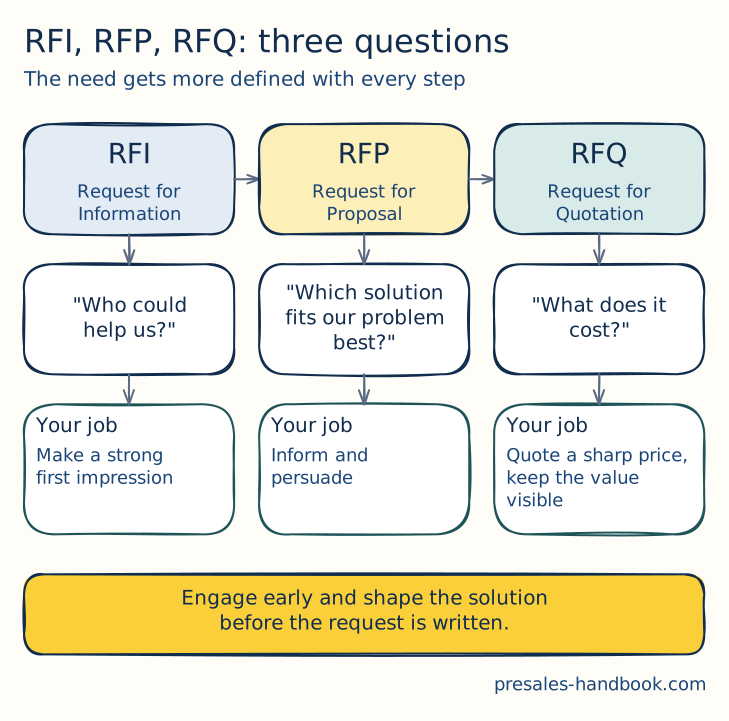
RFX is the umbrella term for three procurement requests. A buyer sends an RFI (request for information) to learn the market and define its needs. An RFP (request for proposal) asks vendors to solve a clear problem. An RFQ (request for quotation) asks for a price when the buyer knows exactly what it wants.
Key takeaways
- An RFX that lands in your inbox without prior contact often means a competitor shaped it. Engage before the request is written.
- Qualify hard. Run the five-question bid or no-bid check before you commit the team.
- Strong answers explain the why behind each requirement, put numbers on the impact and stay clear. After you submit, follow up and ask for feedback, win or lose.
What Is an RFX?
The RFX process covers the RFI (Request For Information), the RFP (Request for Proposal) and the RFQ (Request For Quotation). It is a core part of procurement. Organizations use it to gather information, collect detailed proposals and get competitive quotes from vendors. For presales, it calls for insight, foresight and a close understanding of what the client needs and expects.
RFI starts the procurement cycle. The organization wants to learn about possible vendors and what they offer. For a vendor, this is the chance to make a strong first impression, show its capabilities and start a relationship with the potential client.
RFP goes further. It comes from organizations that have a clear problem and are looking for the best solution. An RFP response has to inform and persuade. It shows the specific value of your solution and how well it works.
RFQ focuses on price for well-defined needs. Vendors have to offer a competitive quote and still make their value clear.
At its core, the RFX process is about relationships. Answering requests is not enough. You need to talk with potential clients long before they issue a request. Take part in early discussions, understand the client's situation and help shape the solutions they consider.
For presales, this means preparation, relationship building and market awareness. If you engage early, understand the client's needs and shape the story, you raise your chances in the RFX process a lot. You then take part in the conversation that leads to the decision, and you are in a good position when it is made.
Timing Matters
Timing is critical in presales. Good timing means you engage early. You are there when the project starts, and you guide the client through the decision process.
An RFP that arrives in your inbox without prior contact usually means you are late. Competitors have probably shaped the client's expectations and requirements already, so they fit their own solutions. Engage before such formal documents exist. That is when you can understand and shape the client's needs and views.
Benefits of Early Engagement:
Insights into Client Needs: Early conversations show the client's priorities, pain points and expectations. You can then tailor your response.
Shaping Perceptions: Early involvement makes your company a trusted advisor. Your solution becomes part of the client's plans.
Influencing RFP Requirements: When you share expertise and show value early, the RFP is more likely to match your strengths.
Strategies for Early Engagement:
Building Relationships: Relationships built on trust keep you in the conversation from the start.
Proactivity: Follow market trends and industry shifts so you can offer insights and solutions before the client asks.
Understanding the Client's Wider Environment: Know the outside factors that affect your clients. Then you can anticipate needs and propose solutions at the right time.
Qualify Hard: The Five-Question Bid or No-Bid Check
Presales teams see plenty of RFX opportunities. The skill is to qualify them and decide which ones deserve your time, resources and expertise. Not every RFX leads anywhere. Some cost a lot of effort and return little or nothing. Strict qualification keeps your effort on the opportunities with the best chance of success and the best fit with your company's capabilities and goals.
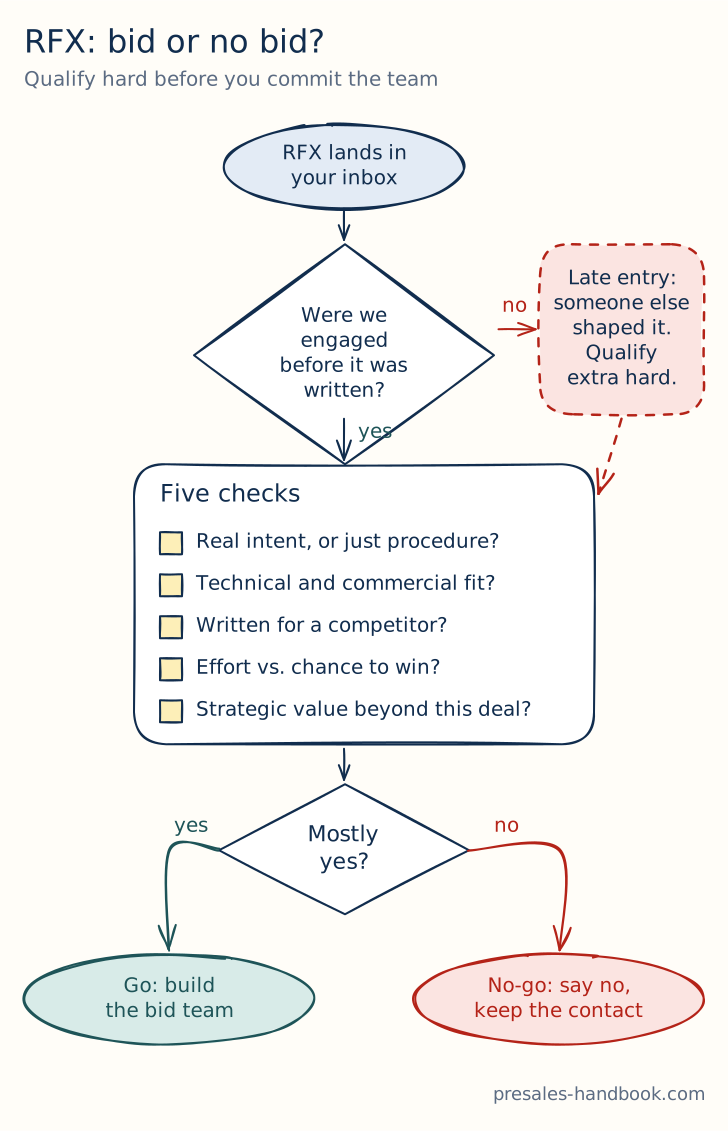
A go or no-go check before you commit the team to an RFX.
The five-question bid or no-bid check. Answer these five questions before you commit the team. Mostly yes means go. Otherwise, decline and keep the contact.
Understand the Issuing Organization's Objectives: Find out the real intent behind the RFX. Is the organization looking for a solution, or is this only a procedural step? Knowing its motives helps you decide whether to take part.
Assess Technical and Commercial Fit: Check whether the RFX plays to your strengths and whether your solution meets the requirements with confidence. Also check whether the commercial terms fit your pricing strategy.
Examine the Competition: Identify likely competitors and assess where your solution is stronger. An RFX written around another vendor's product may point to a decision that is already made. Factor that into your decision.
Evaluate Time and Resources: Weigh the effort of a response against the possible return. The effort should match your chance of winning and the strategic value of the opportunity.
Consider Long-Term Strategic Value: Look past the immediate revenue. A bid can have strategic benefits, such as a relationship with an important organization or entry into a new market.
Principles for the RFX Process
A successful RFX process needs technical skill, strategic foresight and a good understanding of the client's needs. These principles guide it:
Early Engagement: If you enter the RFX process without any earlier contact with the client, you join the conversation halfway through. Early engagement lets you build a relationship that goes beyond the transaction. You learn the client's challenges, plans and the gaps in their current solutions. This makes you a trusted advisor. You and the client then work toward a shared goal.
Understanding Your Offering: Know your strengths and your weak spots. Your strengths show where you excel. Your limitations point to room for innovation, partnerships or alternative solutions. Knowing both lets you present an honest and convincing proposal.
Collaboration Across Teams: An RFX response needs several departments working together. Sales, technical experts, presales and customer success all contribute what they know. Together they write one coherent response that shows the client a united team.
Attention to Detail: A careful RFX response shows diligence and commitment. Missed details or skipped questions can look like a lack of interest or care. A detailed, complete response shows professionalism and real interest.
Key Takeaways:
Build Relationships Early: Engage with potential clients before the RFX process begins. Understand their specific challenges and goals so they see you as a useful advisor.
Show Your Strengths: Tailor your response to your company's strengths. Where you are weak, consider new approaches or partnerships to strengthen the proposal.
Work Together: Make the RFX response a joint effort of all relevant departments, with everyone behind the proposal's value proposition (opens in a new tab).
Prioritize Detail: A detailed response shows your commitment and interest in the project. Missing details can weaken the credibility of your proposal.
Crafting Compelling Responses
A convincing RFX response does two things. It shows that you understand the client's underlying needs. And it shows clearly how your solution meets them. These points help your answers land with potential clients:
Find the 'Why' Behind the 'What': Look closely at the client's needs and challenges, beyond the obvious pain points. Link your solution's strengths to the client's strategic goals. Your proposal then tells a story about where the client wants to go and how you help them get there.
Use Real-world Scenarios: Use cases turn abstract ideas into concrete benefits. Clients can picture your solution at work in their own setting. When you adapt the scenarios to their industry, you show that you understand the client's world and challenges.
Quantify the Impact: Numbers persuade. Put figures on benefits such as cost savings, efficiency gains or ROI. That gives concrete evidence of your solution's value and helps decision-makers weigh the investment against the return.
Incorporate Client Testimonials: Endorsements and success stories from happy customers are strong evidence that your solution works. They count even more when they come from a similar industry or a similar challenge.
Ensure Clarity: Give complete information, but keep it clear and concise. Technical experts and executive decision-makers should both be able to follow your proposal. Leave out unnecessary jargon.
Beyond the Submission
After you submit an RFX response, several steps can still change the outcome:
Follow-Up: Follow up after you submit. The aim is to show real interest and make your proposal stand out among many, without being pushy. A timely follow-up shows your commitment and that you are ready to answer questions or send more information.
Presentations and Demos: If you make the shortlist, you usually present your proposal in more detail, in a presentation or a live demo. Prepare thoroughly for this stage. Show how your written proposal works in practice and how it fits the client's needs. Expect tough questions and prepare for them. Good answers show the depth of your solution and a team that agrees.
Learning from Feedback: You will not win every RFX. When you lose, ask for feedback. It can tell you why your proposal was not chosen and what you can improve. Use it to sharpen your approach for future RFX responses and to match clients' expectations and needs more closely.
What happens after the submission matters as much as the response itself. Follow up well, prepare thoroughly for presentations or demos, and ask for feedback when you lose. These steps raise your chances of winning. They also help you get better at meeting clients' needs over time.
Tools for RFP Responses
More and more presales teams use specialized tools for RFX processes (RFP, RFI, RFQ). These tools make the response process simpler, faster and better. They bring several benefits:
Centralized Content Libraries: The tools keep a library of organized responses that are easy to find. The library grows and improves with every new response, so you answer faster and more accurately over time.
Artificial Intelligence Integration: Built-in AI can suggest complete answers by combining content from different parts of the library. This covers all aspects of an RFP question and keeps the answers thorough.
Enhanced Collaboration: Responding used to be a task for one person. Now several departments work on it together. RFX tools support this with real-time editing, comments, task assignments and deadline tracking, all on one platform.
Integration with Other Platforms: The tools can connect to CRM systems, communication tools and cloud storage. Information flows between them, and your answers use the most current data.
Analytics for Future Bids: The tools also analyze your data to find trends. That informs future strategies and improves the success rate of your proposals.
Quality and Strategic Benefits: Automation saves time, collaboration pools expertise and integration enriches the content. The proposals you write with these tools go beyond the basic requirements. The client then sees you as a strategic partner.
See the RFP tools in the software chapter (opens in a new tab)
PreSales Perspective
The RFX process covers the Request for Information (RFI), the Request for Proposal (RFP) and the Request for Quotation (RFQ). Many organizations build their procurement strategy on it. For presales, the work goes beyond supplying information, prices or proposals. You show that you understand the client, you build the relationship, and you align with the client's needs and expectations.
Early Engagement and Relationship Building: Successful presales professionals engage with potential clients before an RFX is issued. This builds a relationship and a solid understanding of the client's business, challenges and goals. The client sees the presales team as trusted advisors. This can bring the RFP closer to your solution or even shape the client's requirements.
Tailored Responses with Insight: Avoid generic answers in RFX responses. Tailor the solution to the client's specific situation and pain points. That takes technical knowledge plus a clear view of how your solution solves this client's problems in a way others cannot.
Proactive Value Demonstration: Show the value of your solution actively in your RFX responses. You can present case studies, prove ROI with data and analytics, or suggest new approaches the client has not considered.
Qualifying Opportunities: Not every RFX is worth pursuing. Presales teams must check whether an RFX fits their company's strengths and whether the client is likely to value their approach. That means understanding the client's selection criteria and judging how likely you are to beat the competition.
Collaborative Approach: Write RFX responses together with other departments in your organization, such as technical experts, marketing and sales. Then the proposal is complete and reflects the combined expertise and capabilities of your company.
Feedback and Continuous Improvement: Win or lose, ask the client for feedback on your responses. It shows you how to improve future RFX responses and meet client expectations better.
What Is an RFP in Sales?
An RFP (request for proposal) is a formal document in which a buyer describes a problem and asks vendors for a tailored solution. The buyer knows what it needs to solve, but not yet how. A strong response informs and persuades. It shows how your solution meets their goals, with use cases and numbers.
What Is the Difference Between an RFI and an RFP?
An RFI usually comes first. The buyer uses it to see who is out there and to define its requirements. An RFP follows when the problem is clear and the buyer wants concrete proposals. For a vendor, the RFI is the chance to make a first impression and start a relationship.
When Should You Decline an RFP?
Decline when most answers in the bid or no-bid check are no. Watch for three warning signs. The RFP arrives without any prior contact. The requirements look written for a competitor. Or the effort is out of proportion to your chance to win. Every hour on a lost cause is an hour missing from a deal you can win.
Which Tools Help With RFP Responses?
RFP response tools keep a library of approved answers and use AI to draft new responses from it. They let sales, presales and experts work in one place, with tasks and deadlines. Many connect to your CRM and cloud storage. The software chapter (opens in a new tab) lists RFP tools worth a look.
What Happens After You Submit an RFX Response?
Follow up and offer to answer open questions. If you are shortlisted, prepare a presentation or demo that brings your written proposal to life. If you lose, ask for feedback and use it for the next bid.
From the blog
- 6 min read
Outsourcing in Presales: Can It Work Without Losing the Essence?
Can presales be outsourced without losing what makes it work? Where outsourcing helps, where it hurts, and how to decide.
Read more - 8 min read
Should You Answer an RFI When the Prospect Goes Silent?
You answered an RFI and heard nothing back. Whether to keep responding to silent prospects, and how to qualify before you invest.
Read more - 6 min read
When to Walk Away: Evaluating RFPs and RFIs Against Your Competitor's Success
An RFP arrives, but it looks written for a competitor. Four steps to analyse it, talk to the client and decide whether to bid or walk away.
Read more