
Playbook · Chapter 9
Proof of Concept (PoC) in Sales: PoC vs PoV vs Pilot
A sales PoC is a short test that proves your software meets one key customer need. How it differs from a PoV and a pilot, and how to run one well.
A proof of concept (PoC) in sales is a small, time-boxed test. It shows a customer that your software meets one key requirement in their own context. It answers one question: "Can this software do what we need?" A proof of value (PoV) goes further and asks whether it pays off. A pilot tests it in daily operations.
Key takeaways
- A PoC proves it can work, a PoV proves it pays off and a pilot proves it works in daily operations. Each step takes longer and costs more.
- Agree on clear, measurable success criteria with the customer before you start. Give the PoC a fixed start and end date.
- Not every deal needs a PoC. Strong references, a very niche requirement or a tight timeline can be good reasons to skip it.
What Is a Proof of Concept (PoC) in Sales?
A Proof of Concept (PoC) is an important step in the presales process for SaaS solutions. It shows in practice how a product solves the specific problems of a potential client. A successful PoC makes the product's strengths visible and sets it apart from competitors. It also speeds up the sales cycle and starts a lasting client relationship. For a PoC to work, tailor it carefully to the client's needs and scenarios.
A Proof of Concept works like a test drive. You are interested in new software for your business. Before you commit, you want to be sure it can do one specific thing you need. So you set up a small experiment to see if it meets that need. It answers one question: "Can this software do what we want it to do?"
Key Points:
Small Scale: You test a limited scope, just enough to see if the software meets your key requirement.
Short Duration: It is quick and often done in a few weeks.
Limited Investment: Because the test is small, you spend little time and money.
Focus: The main goal is to validate a specific functionality or capability.
Proof of Value (POV)
A Proof of Value goes a step further. It shows the actual benefits the software brings to your business. These might be higher efficiency, cost savings or other specific outcomes you aim for. The PoV justifies the investment by showing how the solution solves your problems or improves your operations. For decision-makers, that makes it a key step. The question moves on from "Can it work?" to "Will it bring us the value we need?"
Key Points for PoV:
Value Demonstration: Shows the real-world benefits and ROI (opens in a new tab) of the solution.
Business Impact: Focuses on how the solution improves operations, reduces costs, or otherwise benefits the business.
Later Stage: Typically follows a successful PoC and goes deeper into the practical effects.
What is a Pilot?
In a pilot, you already think this is the right software for your company. So you start using it in a real scenario, on a smaller scale. You see how the software performs in your daily operations. You spot issues early and make sure it works well with your other systems.
Key Points:
Larger Scale: Unlike a PoC, a pilot involves using the software under real working conditions.
Longer Duration: It can last several months, which gives you enough time to evaluate.
More Resources: The investment is bigger, because you use the software in real business operations.
Comprehensive Testing: You check more than one capability. You see how the software fits your overall workflow, how it affects productivity and whether it meets a range of requirements.
PoC vs PoV vs Pilot
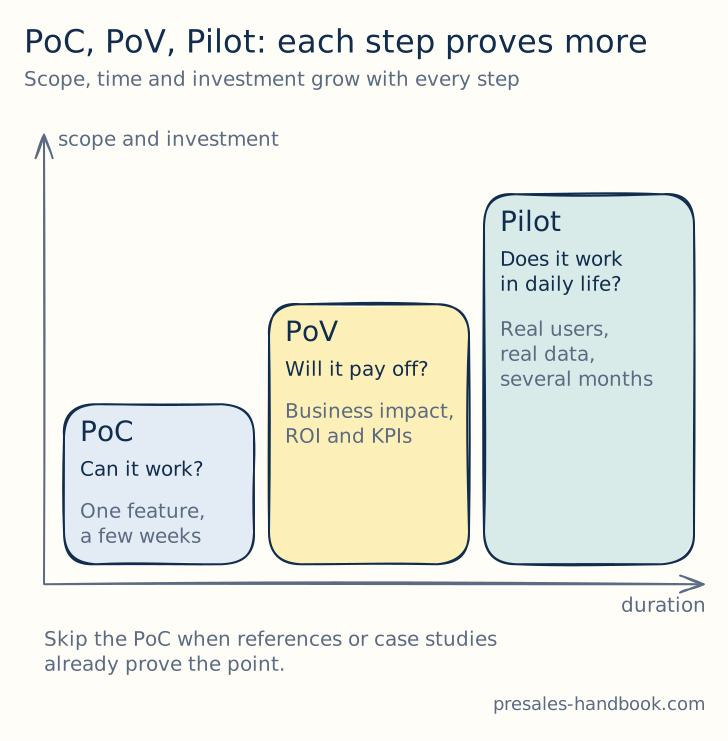
The PoC, PoV and pilot staircase. Each step proves more and costs more.
| POC | POV | Pilot |
|---|---|---|
| Objective: To demonstrate that a certain technology or software can perform a specific function or task in a controlled environment. Focus: Technical feasibility and functionality. Scale: Small, often limited to a specific feature or functionality. Duration: Short-term, typically a few weeks. Outcome: Determines whether the solution is technically viable. | Objective: To show the real-world benefits and value that the solution can bring to the business, such as cost savings, efficiency improvements, or other key performance indicators. Focus: Business impact, benefits, and return on investment (ROI). Scale: Broader than PoC, focuses on how the solution affects specific business outcomes. Duration: Longer than PoC, can extend for a few weeks to a few months, depending on the complexity. Outcome: Demonstrates the tangible business value and supports the business case for investment. | Objective: To evaluate the solution's performance and integration capabilities in a live environment, identifying any potential issues before full-scale implementation. Focus: Operational fit, integration with existing systems, user adoption, and overall impact on daily business processes. Scale: Larger, involves more users and departments, simulating real-world usage more accurately than PoC or PoV. Duration: Long-term, often several months, to fully understand the solution's impact and effectiveness. Outcome: Provides a comprehensive view of the solution's performance, helping to make an informed decision on full-scale implementation. |
Scale and Focus: The PoC is the smallest and most focused. It checks technical feasibility. The PoV widens the scope to business value and benefits. The pilot is a full operational test of real-world usability and integration.
Objective and Duration: The PoC proves technical capability in the shortest time. The PoV shows business benefits and needs a bit more time. The pilot tests deployment on a larger scale, so it runs longest.
Outcome: Each step builds on the one before. It starts with technical feasibility (PoC), moves to business value (PoV) and ends with readiness for full deployment (Pilot).
PoC Preparation
A Proof of Concept is a tailored demonstration. It proves a product's value in the client's real environment, on the client's specific problems. Prepare thoroughly and make the PoC directly relevant to the client's environment and needs. Then you turn more prospects into clients, and the relationship starts on solid ground.
Understanding the Client's Needs: First, spend real time with the client. Understand their challenges, their requirements and what they hope to achieve with your solution. You need this to tailor the PoC. It also shows the client you care about their concerns.
Setting Clear Objectives: Agree on what the client expects to see and which problems they want to solve with your solution. These clear, measurable objectives steer the PoC and are the benchmark for its success. Write them down, share them and get the client's approval, so both sides agree on what success looks like.
Tailoring the Demonstration: The demonstration should mirror the client's working environment and use their data and workflows. That makes the PoC directly relevant, because it shows practical answers to their real problems.
Engaging the Right Resources: A PoC often needs several experts, such as product specialists, solution architects and product managers. With the right expertise in the room, the demonstration runs smoothly. Questions get good answers, and technical problems get fixed fast.
The PoC's Execution
A well-run Proof of Concept shows how a SaaS solution meets a potential client's specific needs. It shows what the solution can do. It also builds confidence that the solution is worth it and fits the client's situation. A short guide:
Start with a Story: Open the PoC with a story that frames the client's challenges and shows how your solution answers them. That keeps the demonstration engaging and close to the client's context.
Focus on Solution Benefits: Show the features that directly solve the client's specific challenges. Make clear what real benefit and value each one brings. Do not overload the client with every function your solution offers.
Build Interaction: Encourage the client to ask questions, voice doubts and take part during the PoC. You clear up concerns on the spot. You show how flexible your solution is, and that you take their needs seriously.
Address Concerns Promptly: Respond quickly to any issue or misunderstanding during the PoC. Fast answers show you are responsive and that the solution adapts to the client's requirements.
Conclude with Feedback Collection: Close the PoC with a summary of the value shown. Confirm how the solution fits the client's objectives, and ask for feedback. The feedback can be positive or critical. Either way, it helps you understand reservations, sharpen your approach and steer the next conversations.
Measure PoC Success Beyond the Demo: Evaluate how well the PoC worked. Look at the technical execution and at how it landed with the client. Use feedback forms for structured responses and follow up with stakeholders for detailed impressions. Also consider the influence of the PoC on the decision-making timeline as an indicator of success.
Why Run a PoC, and When Should You Avoid One?
A Proof of Concept helps a hesitant client get to a decision. These are the reasons to run one, and the cases where you can skip it:
Reduces Perceived Risk: New software costs money, time and resources. A PoC takes uncertainty out of that investment, because it shows the software working in a controlled environment. That builds trust.
Transforms Promises into Proof: Pitches and presentations explain the theory. A PoC shows the software's capabilities in action. That tangible evidence clearly raises the client's confidence in the product's value.
Accelerates Decision-Making: Adopting B2B software can take a long time. A successful PoC clears up open questions and confirms the value the client sees. So clients move from weighing options to a decision faster.
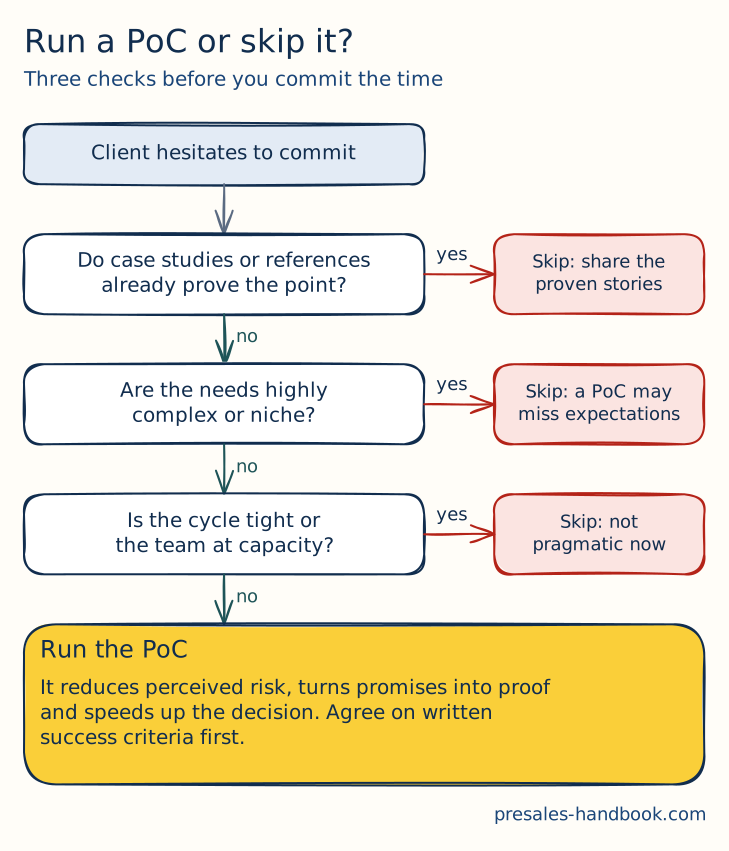
A PoC is not always the best approach, though. You might skip it in these cases:
When Alternative Proof is Sufficient: If case studies, testimonials or references already cover the client's requirements, you may not need a PoC. Proven success stories can be more convincing and cost fewer resources.
For Highly Complex or Niche Requirements: Some client needs are very detailed or niche. Then a PoC that shows the solution's capabilities accurately is hard to build. It may miss the expectations and cost confidence.
Considering Time Constraints: A PoC takes a lot of time for preparation, execution and follow-up. In tight sales cycles, or when the presales team runs several high-priority projects, it may not be practical.
What Is the Difference Between a PoC and a PoV?
A PoC asks "Can it work?" It tests technical feasibility on a small scope, often within a few weeks. A PoV asks "Will it bring the value we need?" It measures business impact such as cost savings or efficiency gains. It usually follows a successful PoC.
How Long Does a PoC Take?
A PoC typically takes a few weeks. A PoV can run from a few weeks to a few months, and a pilot often runs several months. Whatever the length, agree on a start and end date up front. Without one, a PoC turns into an endless exploration.
Who Runs a PoC?
In many companies, professional services set up and configure the PoC environment. Presales defines the objectives with the customer, tailors the PoC and leads the story. Sales keeps it aligned with the deal, and product management advises on the right features. Some teams have a dedicated PoC manager who coordinates everything.
How Do You Measure PoC Success?
Compare the result with the success criteria you agreed with the customer at the start. Add feedback forms and one-on-one talks with key stakeholders. A quick decision after the PoC is also a good sign that it worked.
From the blog
- 6 min read
What Humane AI Pin’s Failed Launch Teaches Us About the Need for PreSales
The Humane AI Pin promised a lot and failed at launch. What its story shows about the need for honest presales and real discovery.
Read more - 6 min read
Outsourcing in Presales: Can It Work Without Losing the Essence?
Can presales be outsourced without losing what makes it work? Where outsourcing helps, where it hurts, and how to decide.
Read more - 4 min read
The Role of a PreSales Professional: Beyond Sales, Bridging the Gap
What presales professionals do, why the role matters, the challenges they face and how the job is changing in SaaS.
Read more