
Playbook · Chapter 1
Sales Discovery
How to run sales discovery with BANT, CHAMP or MEDDIC, when presales should join, and what it costs to skip qualification.
Key takeaways
- Sales discovery qualifies a deal early. Use BANT for a quick check, and CHAMP or MEDDIC for complex deals.
- Presales usually joins after sales discovery. Step in earlier when the deal needs technical depth from the start.
- Skipping qualification is expensive. Every weak deal takes time from Sales, Presales and Product that a better deal needed.
The BANT Framework
Sales discovery is the first step toward a possible sales relationship. Here the sales team learns the client's situation, problems, goals and needs. It is a structured investigation of a possible client.
For PreSales, sales discovery is the base for everything that follows. It tells you what the client's situation, problems, goals and needs are. That knowledge guides the path from prospect to a working client partnership.
BANT is the quickest way to check that first conversation. Four questions, and the diagram shows all of them.
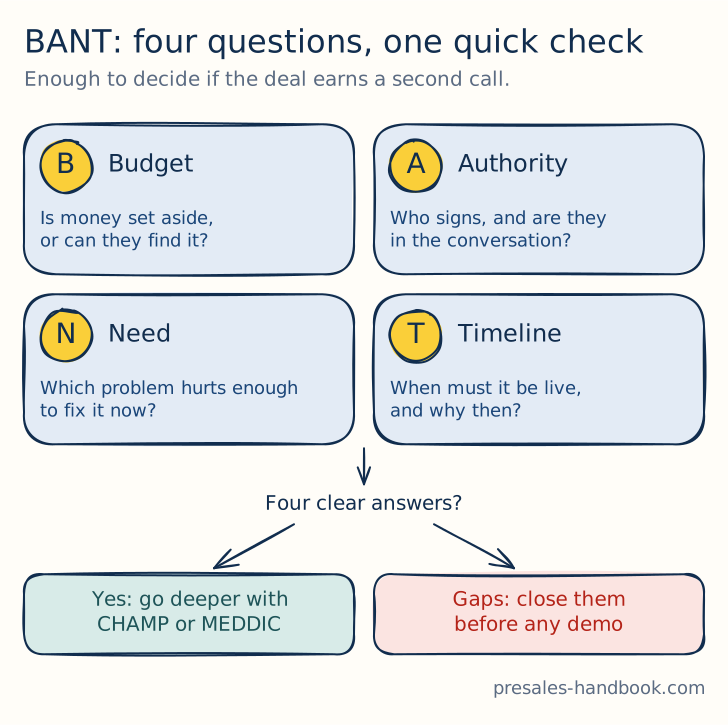
Four questions, one quick check. Close the gaps before the demo.
Budget: Find out what the client can and will spend. Then you can shape the offer without going over their budget.
Authority: Find out who makes the decision. Then the sales and PreSales teams talk to the people who can approve a project.
Needs: Uncover the client's exact requirements, challenges and pain points. This is the core of discovery, and it decides how you position the solution.
Timeline: Find out when the client wants to implement the solution and when they expect to decide. This lets you match the sales process to their expectations.
Importance of Documentation: The OSD & CRM
Good documentation guides PreSales through discovery, scoping and tailoring the solution. Use it well and your sales and PreSales work stays simple and effective.
The Opportunity Scoping Document (OSD) (opens in a new tab) is the key document here. It records what Sales and PreSales learned in discovery and links the client's needs to the solution you offer. It lists the client's challenges, pain points, budget limits, decision-makers and implementation timelines. With that, you can tailor a solution that meets the client's expectations.
Store the OSD in your CRM, so the whole team can find and share the information. Tools like Gong.io (opens in a new tab) add to it by analyzing client conversations in detail. That gives you data for your PreSales decisions.
Sales discovery shapes the whole engagement with the client. It keeps the conversation consistent and tells you what was promised in earlier sales calls. It also lets you answer client questions before they become problems. For this, PreSales and Sales need to talk, coordinate and write things down.
When Should PreSales Step into Sales Discovery?
Ideally, the PreSales team joins the client engagement after sales discovery. Then you start with a structured picture of the client and can focus on the technical and solution topics.
Sometimes PreSales gets pulled into sales discovery anyway. That happens most often when the sales team is new or does not know certain functional and technical details. Your technical knowledge helps set the right expectations and answer detailed questions early.
PreSales & Sales Discovery
The PreSales team needs to know what was discussed in sales discovery. That is the phase where Sales first talks to a potential customer about their needs. It includes any promises made and whether the prospect meets the BANT criteria (budget, authority, need and timing). With this knowledge, PreSales has an easier job later.
PreSales may join discovery, especially when the sales team is inexperienced or needs help with technical topics. Then PreSales answers complex technical questions. PreSales also helps set the right expectations and makes sure everyone understands the BANT criteria from the start.
BANT gives PreSales and Sales a full picture of the potential client. PreSales uses that picture to plan the approach. It also shows how the products can meet the client's specific requirements. When everyone knows what sales discovery found, the handover is smooth. The work moves from early talks to the details of the client's requirements. The result is satisfied customers and profitable deals.
The Cost of not qualifying early
B2B sales is complex and takes a lot of people's time and company resources. Sales, PreSales and Product Management all put effort into chasing a potential deal. On top of that effort come hidden costs.
The main ones:
Opportunity Cost: Time spent on one deal is time you cannot spend on others. If you lose the deal, that time is gone.
Resource Drain: Every lead that will never buy but still runs through your sales process uses up resources.
Dilution of Focus: If you chase every lead, your best opportunities get less attention than they need.
Financial Implications: Travel, demos and sometimes trials add up. Without careful lead qualification, you spend money with no guaranteed return.
Overhead Costs: The everyday costs of running your team, like rent, utilities and software licenses, add up in the background.
Training and Development: Training and certifications that keep your team skilled are a large investment.
Tools and Software: CRM systems, analytics and communication tools cost a lot, but you need them.
Travel & Accommodation: Meeting clients in person or running on-site demos means paying for flights, hotels and meals.
Collateral Development: Sales materials like brochures and presentations have their own costs.
Miscellaneous Costs: Legal fees, contract work and even client dinners add to the total.
Add all these costs up. The estimate of $9,900 for an 8-month sales cycle looks conservative, but it counts only person-hours. The real cost is much higher. So it matters a lot which opportunities you pursue.
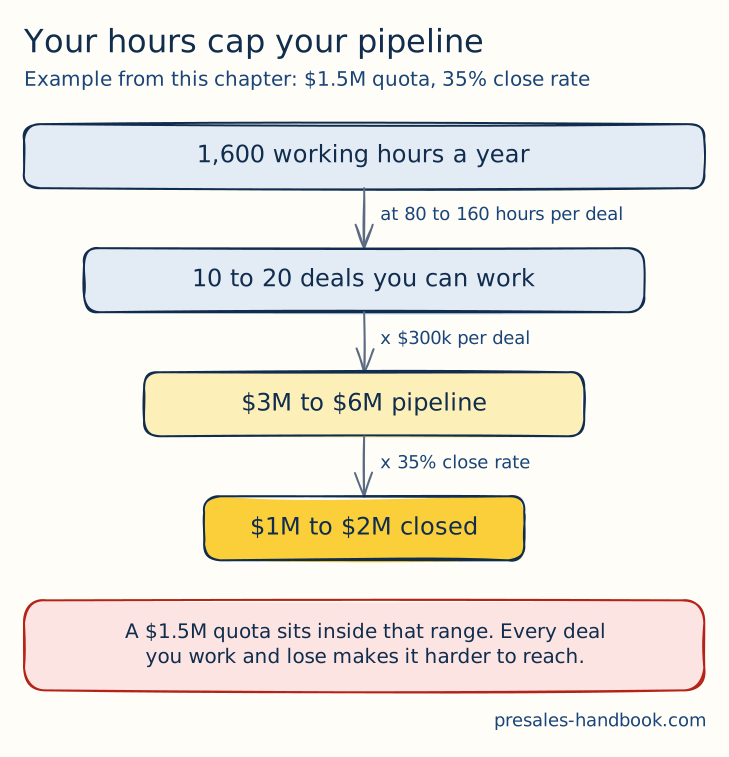
Take a PreSales Consultant (opens in a new tab) with a $1.5 million yearly quota and a 35% close rate. Assume a $300k deal takes 80–160 hours of work. With about 1600 working hours a year, you can handle only 10–20 deals. That makes your pipeline worth 3–6 million, with 1–2 million expected to close. So every deal you work on and lose makes your quota harder to reach.
A long sales cycle with an unqualified lead risks money, team morale and energy. Qualify leads well at the start. It protects your bottom line and keeps your team focused and motivated.
BANT in practice
If you want to use BANT, look at the PreSales Mastery Course. It contains the BANT Form and an Excel-based Qualification Schema. You can use that schema to rate your opportunities.
Further Information (opens in a new tab)
Other Frameworks: CHAMP, MEDDIC and MEDDPICC
BANT is still useful for basic qualification. Many sales professionals now prefer more customer-centric approaches. Examples are CHAMP (Challenges, Authority, Money, Prioritization) and MEDDIC (Metrics, Economic Buyer, Decision Criteria, Decision Process, Identify Pain, Champion). MEDDPICC adds two letters to MEDDIC for large deals with a long paper trail.
CHAMP
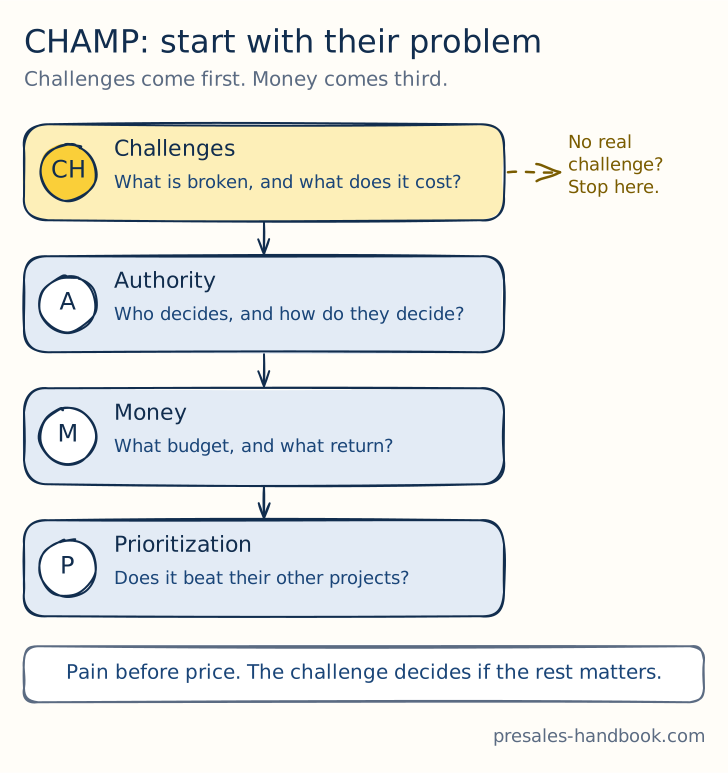
CHAMP starts with the customer's problem. No real challenge, no deal.
CHAMP is a modern qualification approach that starts with the customer's needs and challenges. The acronym stands for Challenges, Authority, Money and Prioritization. Each part in turn:
Challenges
Identify and Understand Problems: Focus on the prospect's core challenges and pain points. Understanding these issues helps you determine how your solution can address their specific needs.
Examine the Impact: Analyze how these challenges affect their operations, efficiency and goals. This helps you tailor your solution so it helps them most.
Authority
Identify Decision-Makers: Determine who in the organization has the power to make purchasing decisions. This could be one person or a group of stakeholders.
Understand the Decision Process: Learn about their decision-making criteria and processes to align your approach accordingly.
Money
Assess Financial Capability: Understand the prospect's budget and financial constraints. This helps you propose a solution that is within their financial reach.
Demonstrate ROI (opens in a new tab): Clearly show the return on investment (ROI) your solution will bring. This can help justify the cost and secure the budget.
Prioritization
Gauge Urgency: Determine how urgent the prospect's need is for a solution. Are they actively looking for a fix, or is it a lower priority?
Align with Business Goals: Understand how high your solution ranks in their list of business priorities. This helps you time your sales efforts and tailor your approach.
Key Takeaways
Customer-Centric Approach: CHAMP moves the focus from the seller's needs to the customer's challenges. The sales process then centers on helping the customer.
Qualitative Insight: When you understand the challenges and the decision process, you can offer more relevant solutions.
Strategic Alignment: When you know the prospect's budget and priorities, you can write proposals that fit their budget and business goals.
MEDDIC
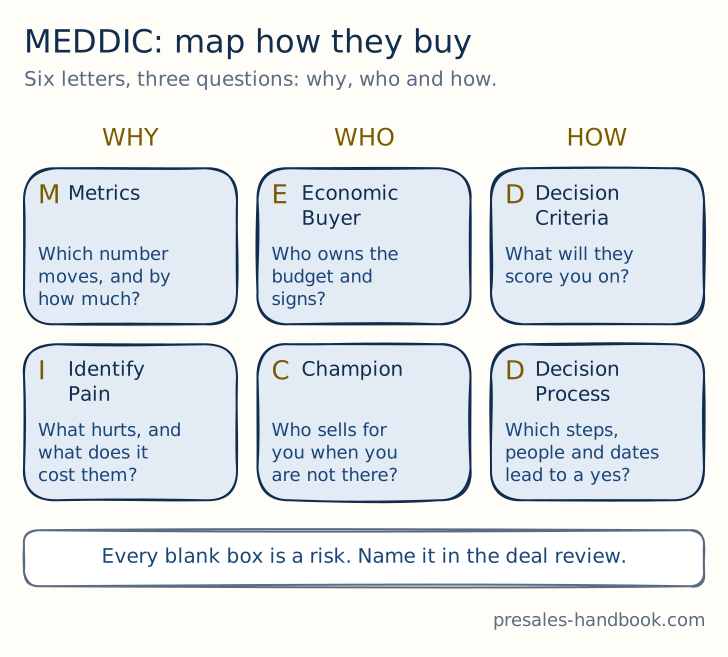
Why they buy, who decides, how they decide. Six boxes, and each one needs an answer.
MEDDIC is a thorough qualification approach. It focuses on the prospect's buying process and main decision criteria. The acronym stands for Metrics, Economic Buyer, Decision Criteria, Decision Process, Identify Pain and Champion. Each part in turn:
Metrics
Quantify Success: Identify the key performance indicators (KPIs (opens in a new tab)) and metrics that the prospect uses to measure success. Understanding these metrics helps you align your solution with their goals and demonstrate tangible benefits.
Show ROI: Provide clear evidence of how your solution can improve these metrics, thereby delivering a strong return on investment (ROI).
Economic Buyer
Identify the Economic Buyer: Determine who has the final authority over the budget and purchasing decision. This person controls the financial approval for the purchase.
Understand Their Perspective: Learn what matters most to the economic buyer, including their strategic goals and financial priorities, to tailor your pitch accordingly.
Decision Criteria
Know Their Criteria: Understand the specific criteria the prospect uses to evaluate potential solutions. This can include technical requirements, cost, vendor reputation, and more.
Align Your Solution: Ensure your proposal meets or exceeds these criteria to position your solution as the best fit.
Decision Process
Map the Process: Learn the steps the prospect will take to reach a buying decision, including the stakeholders involved, timelines, and any necessary approvals.
Facilitate the Process: Provide the necessary information and support to help the prospect navigate this process smoothly and efficiently.
Identify Pain
Uncover Pain Points: Identify the specific problems or challenges the prospect is facing. Understanding their pain points is crucial for demonstrating how your solution can alleviate these issues.
Highlight Urgency: Emphasize the impact of these pain points on their business to create a sense of urgency for your solution.
Champion
Find a Champion: Identify someone within the prospect's organization who advocates for your solution. This person can influence the decision-making process and help overcome internal resistance.
Enlist Their Support: Equip your champion with the information and tools they need to effectively promote your solution internally.
Key Takeaways
Customer-Focused Insight: MEDDIC centers on the prospect's buying process, decision criteria and pain points. That keeps your solution close to their needs.
Strategic Alignment: By focusing on metrics and the economic buyer, you can tailor your approach to demonstrate clear value and secure financial approval.
Process Efficiency: Understanding the decision process and having a champion can shorten the sales cycle and increase the likelihood of a successful outcome.
MEDDPICC
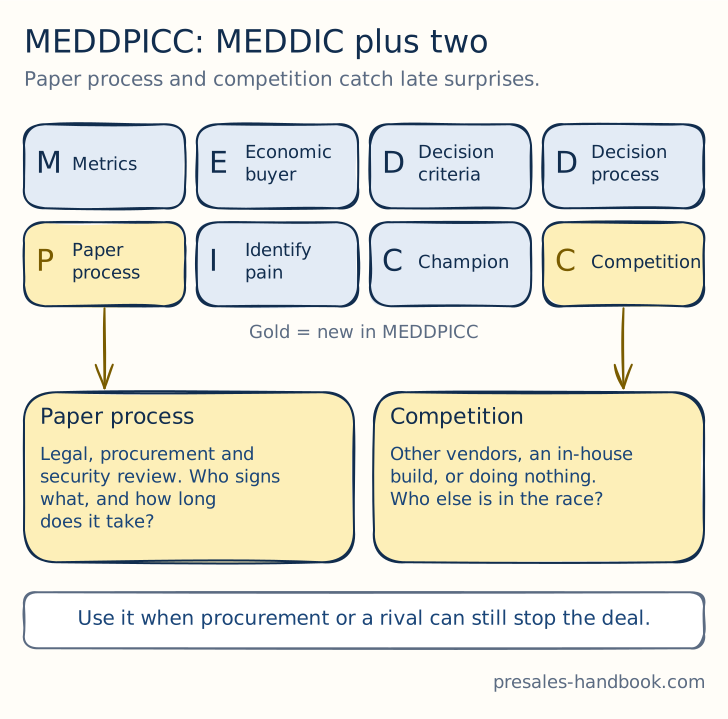
Two extra letters for the things that stop big deals late.
MEDDPICC is MEDDIC with two extra letters: P for Paper Process and a second C for Competition. Both catch the surprises that kill deals after everyone already shook hands. Procurement has never seen your demo, so its quality will not help you there.
Paper Process
Map the Paperwork: Ask how a contract actually gets signed. Legal, procurement, security review and data protection all want a turn. Each step has an owner and a lead time.
Plan Backwards: Put those lead times into the mutual action plan (opens in a new tab). A deal "won" in June and signed in November was never forecast right.
Competition
Know Who Else Is In: Other vendors, an in-house build, or doing nothing (opens in a new tab). Doing nothing beats more vendors than any rival does.
Shape the Criteria: Once you know the alternatives, help the customer set decision criteria that reflect your real strengths. Keep it fair. A rigged list backfires the moment the customer notices.
Key Takeaways
Late Surprises Cost the Most: Most deals do not die in the demo. They die in procurement, or to an option nobody mentioned.
Match the Framework to the Deal: For a small, fast deal BANT or MEDDIC is enough. Use MEDDPICC when many departments sign and the cycle runs for months.
BANT vs CHAMP vs MEDDIC
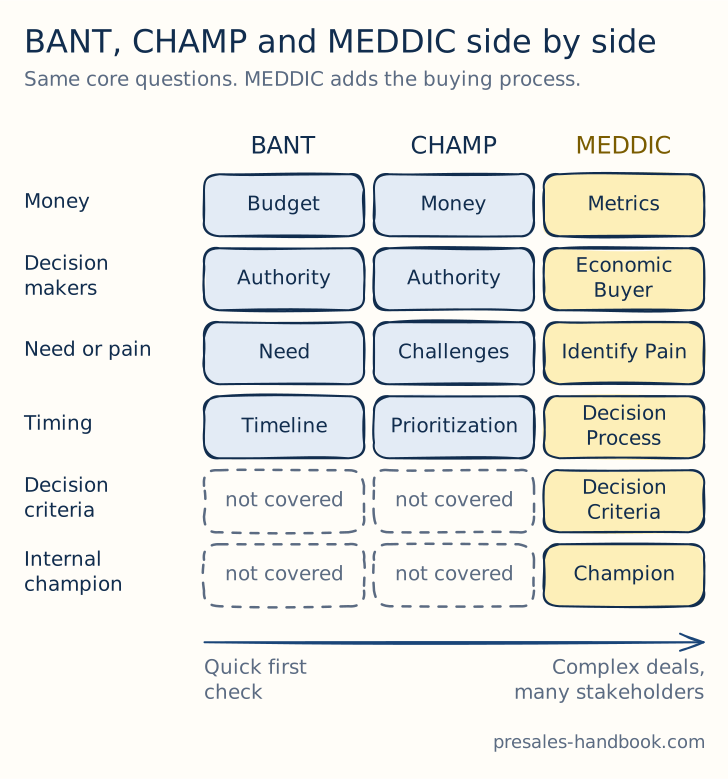
BANT, CHAMP and MEDDIC ask the same core questions. MEDDIC adds the buying process.
Summary
BANT: Good for quick and basic qualification, focusing on whether the prospect has the budget, authority, need, and timeline for the solution.
CHAMP: Provides a more customer-centric approach by focusing on understanding the prospect's challenges and prioritizing their needs and urgency.
MEDDIC: Offers a comprehensive and detailed framework, ideal for complex sales, by covering financial metrics, decision criteria, and the entire decision-making process.
MEDDPICC: MEDDIC plus paper process and competition. Use it for long enterprise deals where procurement and rivals still have a say.
| Aspect | BANT | CHAMP | MEDDIC |
|---|---|---|---|
| Full Form | Budget, Authority, Need, Timeline | Challenges, Authority, Money, Prioritization | Metrics, Economic Buyer, Decision Criteria, Decision Process, Identify Pain, Champion |
| Focus | Basic qualification | Customer-centric, focus on challenges and priorities | Comprehensive understanding of buying process and criteria |
| Budget/Cost | Budget | Money | Metrics (ROI and financial impact) |
| Decision Makers | Authority | Authority | Economic Buyer, Champion |
| Needs/Challenges | Need | Challenges | Identify Pain |
| Timeline/Urgency | Timeline | Prioritization | Decision Process, Identify Pain |
| Criteria | - | - | Decision Criteria |
| Process | - | - | Decision Process |
| Internal Advocate | - | - | Champion |
| Key Strength | Simplicity, easy to apply | Focus on understanding and solving customer problems | Detailed and thorough, covers all aspects of the buying process |
| Use Case | Quick initial qualification | Medium to complex sales cycles | Complex sales environments |
PreSales Perspective
The sections above cover the frameworks. This one is about your job in them.
You test whether the story holds up technically. When Sales hears a need, listen for the architecture, the data model and the migration behind it. Ask the questions only you can ask, and ask them early. If nobody can implement a need, you cannot sell it.
Take notes that survive the call. Write down what the client said, word for word where you can. Put it in the OSD (opens in a new tab) and the CRM the same day, so the next conversation starts where this one ended.
Say no out loud. If the fit is thin, name it in the deal review instead of carrying it into a demo.
In the end, listen to the client's problems and decide honestly whether you can help.
Typical question to ask
| BANT (Budget, Authority, Need, Timeline) | CHAMP (Challenges, Authority, Money, Prioritization) | MEDDIC (Metrics, Economic Buyer, Decision Criteria, Decision Process, Identify Pain, Champion) |
|---|---|---|
| Budget What budget has been allocated for this project? Are there any financial constraints we should be aware of? How flexible is your budget for this solution? Authority Who will be the primary decision-maker for this purchase? Are there other stakeholders involved in the approval process? Can you tell me about your decision-making process? Need What specific problems are you looking to solve with this solution? How critical is this need to your operations? What are the main goals you hope to achieve with this purchase? Timeline What is your desired timeframe for implementing this solution? Are there any critical deadlines or milestones we should be aware of? How soon do you need this solution in place? | Challenges What are the biggest challenges you are currently facing? How are these challenges impacting your business? What solutions have you tried so far, and why haven't they worked? Authority Who in your organization will be responsible for making the final decision? Can you describe the approval process for new projects like this? Are there any key influencers we should be aware of? Money What is your budget for this project? How does your organization typically allocate funds for new solutions? What ROI expectations do you have for this investment? Prioritization How high a priority is this project compared to other initiatives? What are the consequences of not addressing this issue now? Are there any competing priorities that could impact this decision? | Metrics What key performance indicators (KPIs) are you looking to improve? How do you measure success for projects like this? Can you quantify the benefits you're seeking from this solution? Economic Buyer Who has the final say on budget approvals for this project? Can you describe the economic buyer's main concerns and goals? How does the economic buyer assess new investments? Decision Criteria What criteria will you use to evaluate potential solutions? Are there specific features or capabilities that are must-haves? How important are factors like vendor reputation and service level? Decision Process Can you walk me through your decision-making process for this type of purchase? What steps are involved from initial evaluation to final approval? Who else will be involved in the decision-making process? Identify Pain What specific pain points are driving the need for this solution? How are these pain points affecting your business operations? What happens if these issues are not resolved? Champion Is there someone within your organization who strongly supports this project? How can we best equip your champion to advocate for this solution internally? What role will your champion play in the decision-making process? |
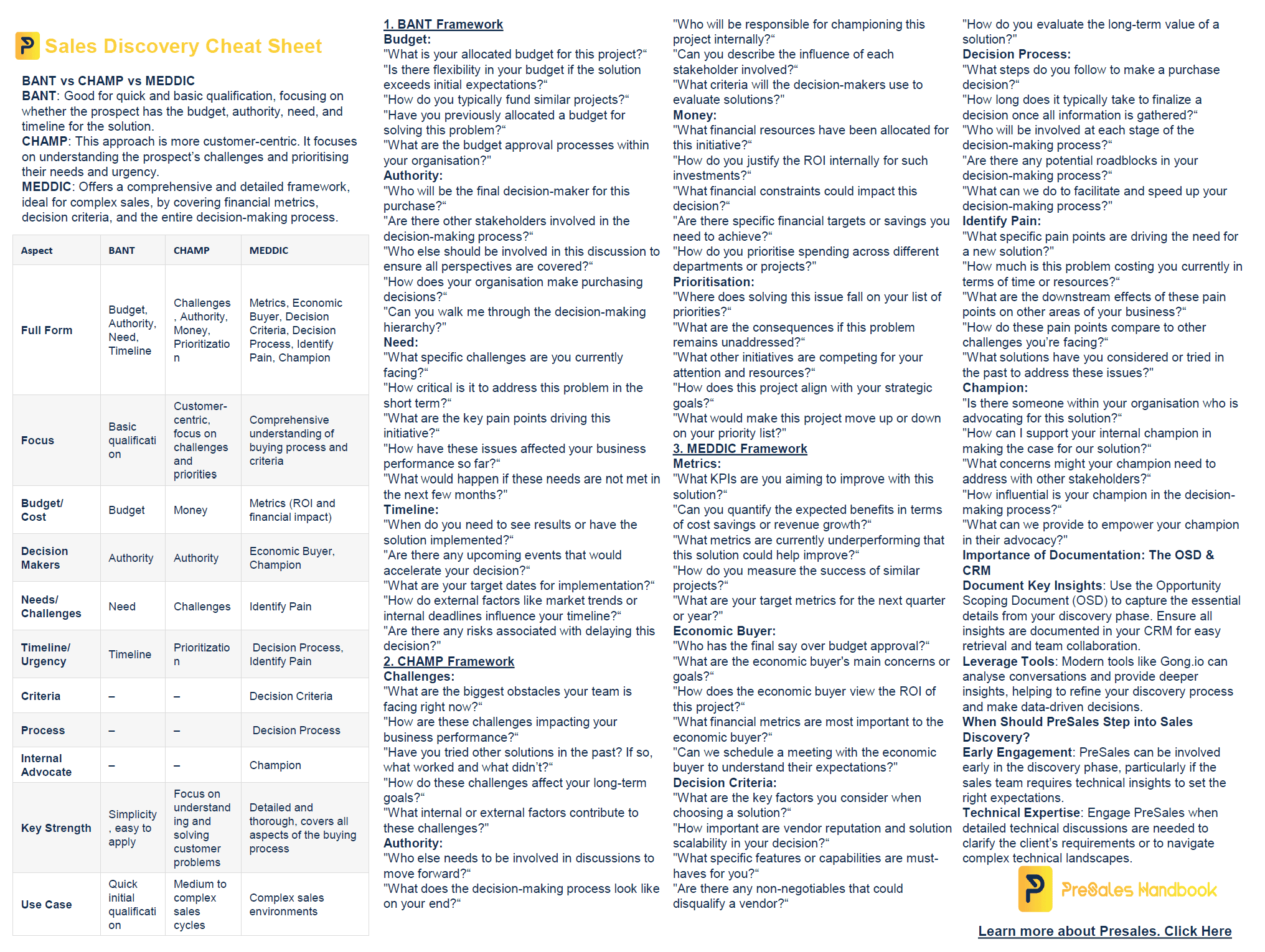
Templates for this chapter
 PDF · 142 KB
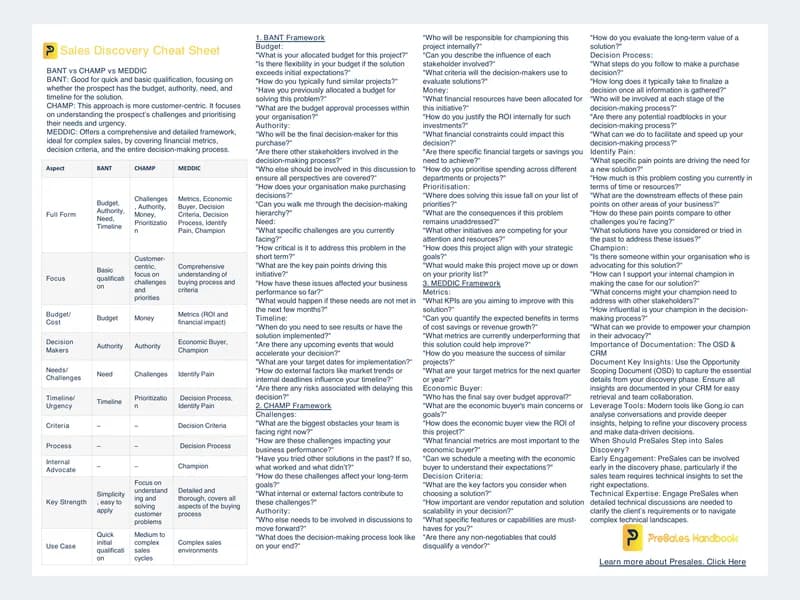
Sales discovery cheat sheet
The questions and steps of a first discovery call on one printable page.
 Included with the courseDOCX · 18 KB
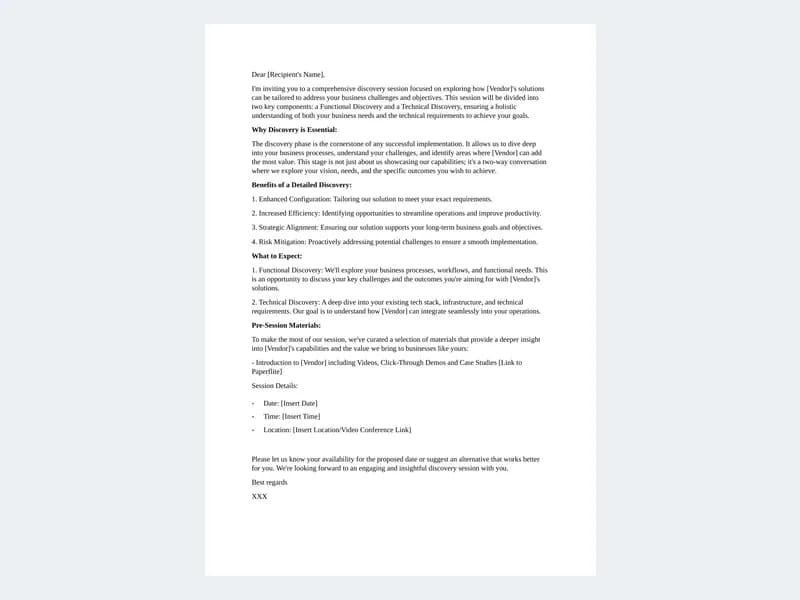
Discovery invite email
A ready-to-edit email that sets the agenda and the goal of a discovery session.
 Included with the courseXLSX · 60 KB
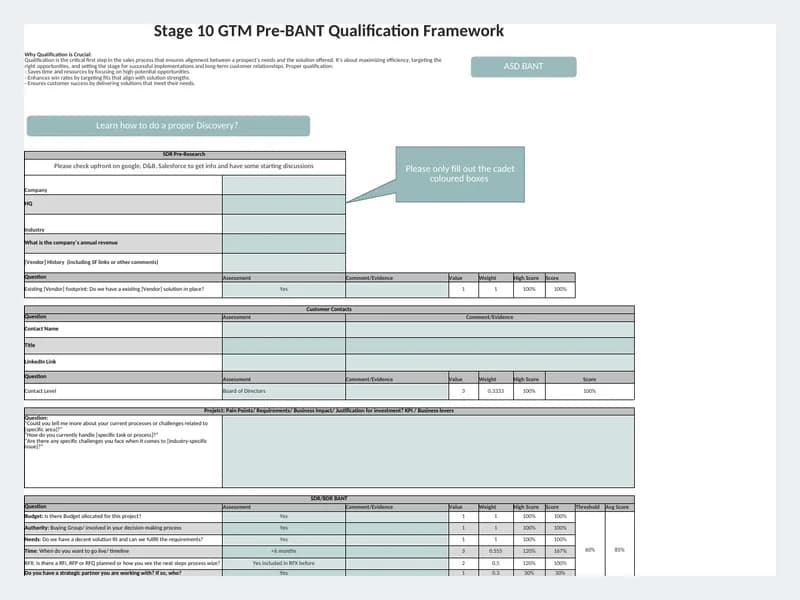
Pre-BANT and BANT assessment
Score budget, authority, need and timeline before you invest presales time.
From the blog
- 5 min read
The Power of Curiosity in PreSales: Why It’s Your Greatest Asset
Curiosity drives better discovery, stronger relationships, sharper demos and calmer objection handling. Why it is a core presales skill.
Read more - 5 min read
Why Salespeople Need PreSales Skills and How to Acquire Them
Salespeople who learn presales skills win more trust and more deals. Which skills matter most and how to learn them.
Read more - 2 min read
Buyers Don’t Hate Salespeople! They Hate Being Sold To
Buyers want guidance, not pressure. How sales and presales can help buyers decide instead of pushing them toward a signature.
Read more
In the course
- Functional & Technical DiscoveryMembers only
- Functional & Technical Discovery Best PractisesMembers only
- The Discovery Summary / Opportunity Scoping Document (OSD)Members only