

Selling journey · Chapter 1
The PreSales Consultant: Role, Skills and Responsibilities
A presales consultant links customer problems to the right solution in B2B sales. What the role does, the skills it needs and why it decides deals.
A presales consultant is the expert on a sales team who connects customer problems to the product. Also called a solutions consultant or sales engineer, they find out what the customer needs and show how the product meets it. They answer the technical questions before the customer buys. They link the sales team to the product.
Key takeaways
- Presales has many titles: Solutions Consultant, Sales Engineer, Solutions Architect and more. The job is the same: connect customer problems to a solution.
- The core work runs from discovery and the Opportunity Scoping Document (opens in a new tab) to demos, proofs of concept and the handover.
- The presales mindset combines technical depth with empathy for the customer's situation.
What Does a PreSales Consultant Do?
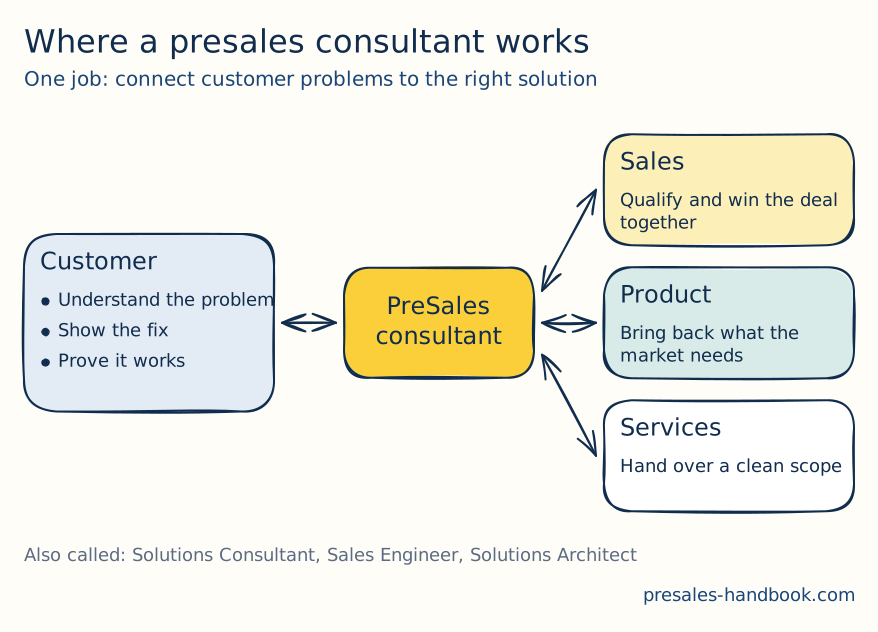
A presales consultant sits in the middle of four groups: the customer, sales, product and services.
You will meet the role under many names. Solutions Consultant, Sales Engineer, Technical Sales Consultant, Solutions Architect, Systems Engineer and PreSales Specialist are the common ones. You find them mostly in software and technology companies, above all in SaaS (Software as a Service).
The title differs by company. The work is the same. This is what it looks like on each side of the map.
With the customer: You find out what the customer really needs. You show how the product meets that need. You answer the technical questions before anyone signs. The goal is simple: the customer understands how the product solves their problem before they buy.
With sales: You and the account executive work the deal as one team. Sales owns the relationship and the commercial side. You make sure the solution fits and prove it. That way you shape how the customer sees the product and how they decide.
With product: You hear every week what the market asks for. You take that feedback back to product management. That tells them what to fix, what to build next and where the competition is ahead. This loop keeps the product relevant.
With services: When the deal closes, the delivery team takes over. You hand over a clean scope, so nobody has to start from zero.
Challenges in PreSales
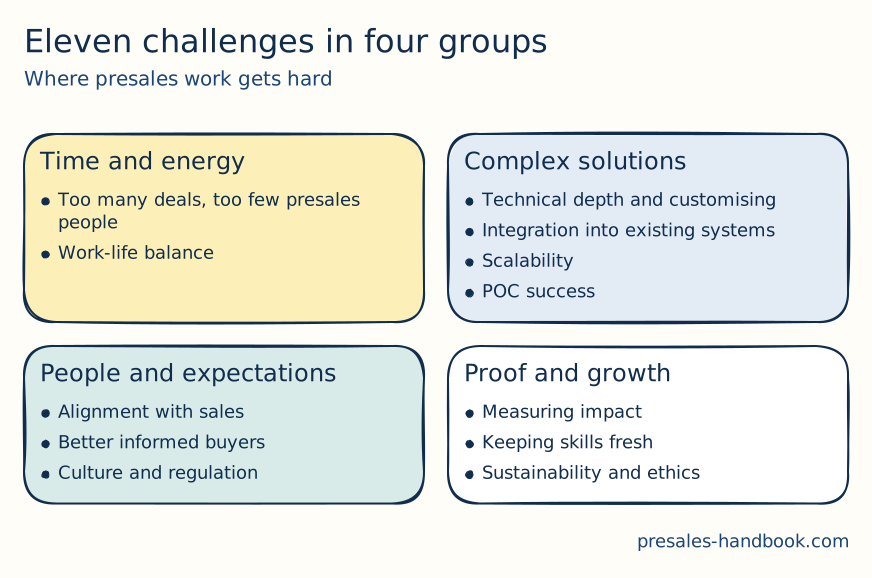
The role is great fun, but it is not easy. Most challenges fall into four groups.
Time and energy
Resource allocation: Many deals compete for few presales people. This is worst in large companies. You have to decide where your time makes the biggest difference. Not every deal gets the full treatment.
Work-life balance: The role is demanding. Sales cycles and customer meetings do not care about your calendar. If you are always available, you burn out. Protect your time on purpose.
Complex solutions
Technical complexity and customising: Solutions become more connected and more complex. Customers want them tailored to their needs. You have to keep up and still propose something that can really be built.
Integration: Customers run many connected systems. A new solution has to fit into them. So you need to understand complex IT environments. Otherwise you cannot show that your solution is feasible.
Scalability: Your customer will grow. The solution you propose has to grow with them without a big rebuild.
POC (opens in a new tab) success: A proof of concept can win a deal or kill it. It has to match what the customer expects and show clear value. That takes a careful balance of technical skill, effort and timing.
People and expectations
Sales and presales alignment: Sales often wants to close fast. Presales wants to be sure the solution fits. Both goals are fair. Without clear agreements, they cause friction.
Better informed buyers: Buyers research a lot before they talk to anyone. They expect more than product facts from you. They want insight into their own business. So you keep learning.
Culture and regulation: International customers bring different laws, business habits and cultures. You need to know the local rules. They can make the sales process a lot harder.
Proof and growth
Measuring impact: It is hard to show how much presales adds to the win. You need clear metrics to prove it. The KPI chapter (opens in a new tab) shows which ones work.
Keeping skills fresh: Products change every quarter. So do sales methods, communication styles and industry standards. You keep learning, or you fall behind.
Sustainability and ethics: Customers expect companies to act sustainably and ethically. You make sure your product meets those standards. You often also explain how it helps the customer reach their ESG goals.
Key Responsibilities of PreSales
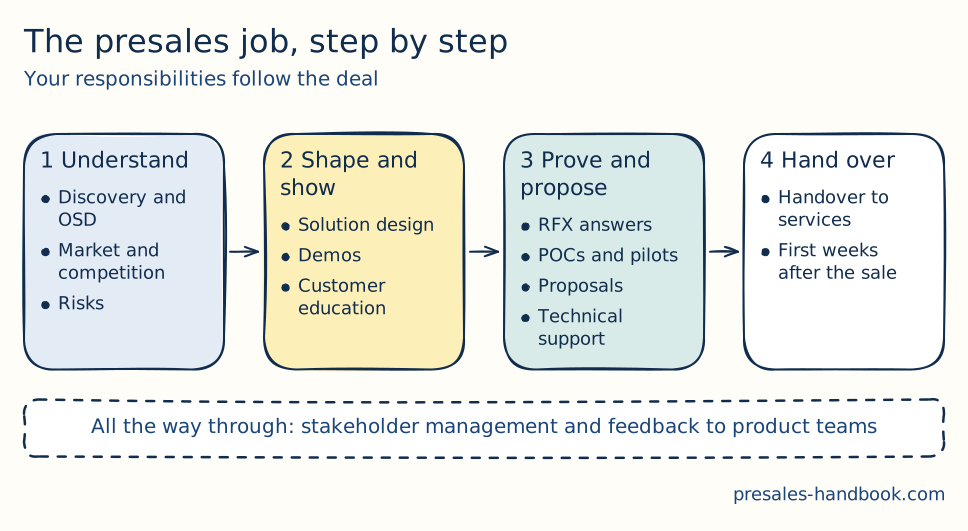
The work follows the deal. You understand the problem, shape and show the solution, prove it and hand it over.
1. Understand
Requirement analysis (discovery): Everything starts here. In functional and technical discovery (opens in a new tab) you build rapport with the customer. You uncover their business problems and goals. You write all findings, gaps, needs and drivers into an Opportunity Scoping Document (OSD). Every later step builds on it (Cohan, 2022) (opens in a new tab).
Market analysis and competitive intelligence: You know where your product stands against the competition. That helps you position it in each deal.
Risk assessment: You spot risks in the rollout or adoption of the solution early. Then you propose how to reduce them.
2. Shape and show
Solution design: When a product is complex or needs changes, you tailor the solution. It has to fit the customer's own requirements (Keenan, 2018).
Demonstrations: A demo shows how well the product works. You build demos around the customer's needs and the product's real strengths (Cohan, 2023) (opens in a new tab). The demo chapter (opens in a new tab) shows how.
Customer education: You explain the product's value and its impact, sometimes in hands-on training. That way the customer can make an informed decision.
3. Prove and propose
RFX responses: RFPs, RFIs and RFQs are a big part of the job. You read the customer's requirements and answer them accurately and convincingly. You work with sales, technical teams and subject matter experts. Together you make the answer technically sound and competitively priced. More in the RFX chapter (opens in a new tab).
Pilots and proofs of concept: You set up and run a pilot with the customer. It shows that the solution works in their environment. You check it against the agreed criteria and fix issues along the way. The feedback from the pilot often decides the purchase.
Proposal development: With the account executive you write the proposal. It shows what the solution does and how it meets the customer's goals. It gives a clear picture of the value.
Technical support: Things break in demos and early setups. You troubleshoot them before they cost trust.
4. Hand over
Post-sale transition: After the signature you stay close for a while. You hand over to professional services and support the first weeks. That keeps customers happy and loyal.
All the way through
Stakeholder management: Partners, vendors and your own colleagues all play a part in the deal. You keep them aligned, so delivery runs smoothly.
Product feedback loop: You talk to product managers and developers regularly. Agree how customer feedback is collected, analysed and passed on. This loop improves the product and keeps it close to the market.
What Skills Does a PreSales Consultant Need?
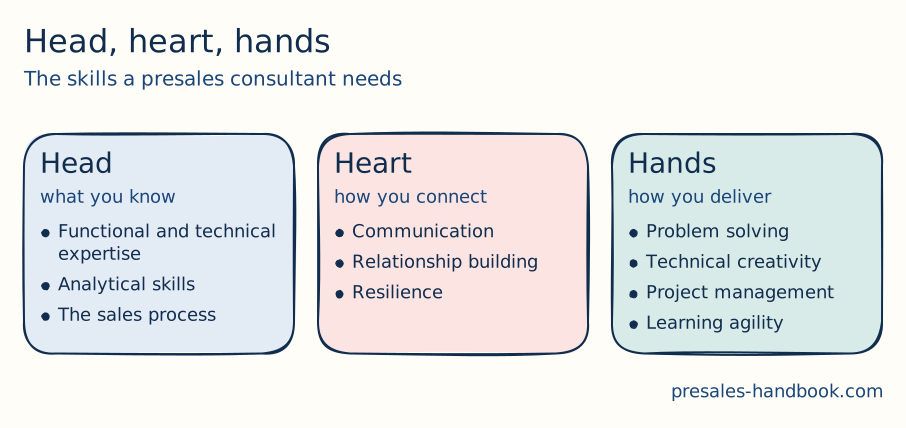
Think of it as head, heart and hands. You need to know things, connect with people and get things done.
Head: what you know
Functional and technical expertise: This is the core. You know the product deeply. You can answer hard questions and show what the product can do. That makes the product and its value credible (Rackham, 1995).
Analytical skills: You work with data in demos and in ROI (opens in a new tab) cases. You read the numbers correctly and turn them into a strong argument.
Understanding of the sales process: You may not close the deal yourself. You still need to know how sales works. Then your work fits the account executive's plan and moves the deal forward (Care, 2020).
Heart: how you connect
Communication: Knowledge is useless if nobody understands it. You turn complex details into clear, engaging stories. That works in a proposal, a presentation or a whiteboard session (Rosenberg, 2015) (opens in a new tab).
Relationship building: Inside the company you need teamwork across departments. Outside you need trust with the customer. Both rest on good relationships.
Resilience: The role can be high pressure. You work on the critical parts of the deal. Sometimes you face tough negotiations or difficult expectations. Resilience keeps you effective when it gets hot.
Hands: how you deliver
Problem solving: Customers ask questions nobody planned for. You think on your feet and find a way. That makes the product look reliable (Keenan, 2018).
Technical creativity: You also invent new ways to meet a customer's needs. That makes presales a source of ideas.
Project management: You run demos, pilots and trial phases. Timelines, resources and customer expectations all need to stay under control.
Learning agility: Technology and customer needs change fast. You learn new things quickly and use them right away.
The Value of a PreSales Professional
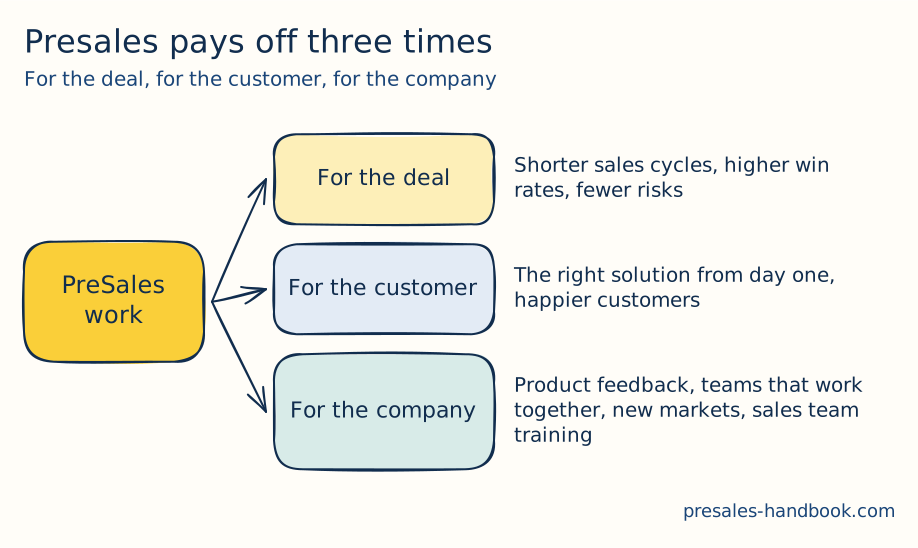
Why do companies pay for presales? Because the role pays off three times: for the deal, for the customer and for the company.
For the deal
Shorter sales cycles: You answer technical questions and concerns quickly. The customer does not wait for answers or get lost in bureaucracy. That moves them to a decision faster. And time is money.
Higher win rates: When the solution matches the customer's problem, the chance to win goes up. You tailor the story to the customer's context instead of reading out a feature list.
Fewer risks: You see obstacles before they become problems. That makes the implementation smoother and cuts problems after the sale.
For the customer
Happier customers: A signed contract is the start of a long relationship. You set its tone. A customer who gets the right solution from day one stays longer. Many become advocates and share their experience. People who feel understood come back (Keenan, 2018).
For the company
Feedback for product teams: You talk to customers every week. So you know what the market needs and where the gaps are. Product teams get real, current feedback instead of only distant market research. The product evolves in the right direction.
Collaboration across teams: You work with marketing, product management and support. That aligns the company with what the customer expects. The customer meets one team.
New markets: Your insights from customer conversations show where the product fits next. That helps the company enter new markets and segments.
Training and mentoring: You often train sales colleagues and new team members. That makes the whole sales team better.
Evolving Role in the Digital Age
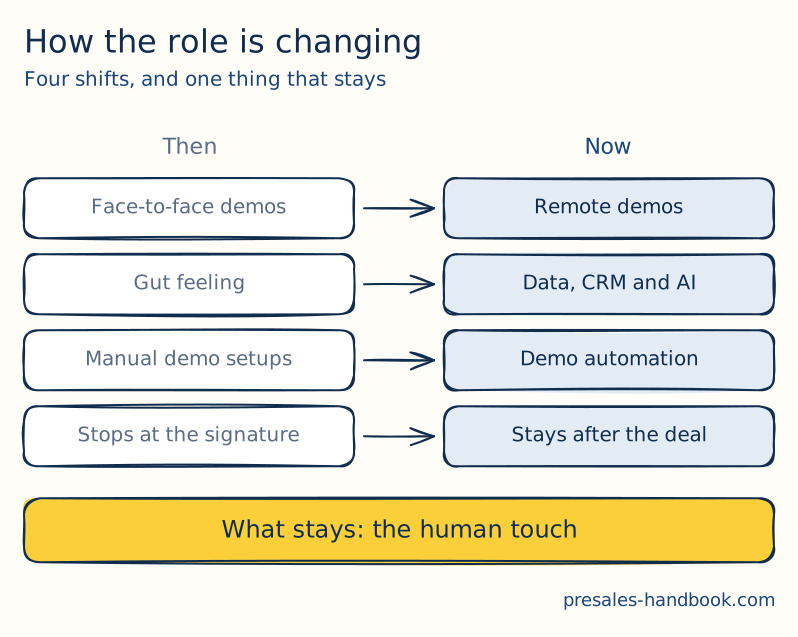
The role has changed a lot in the last ten years. One thing has not.
From the meeting room to the screen
Remote first: Presales used to mean travel, meeting rooms and live demos on site. Today you show a product live to a customer on another continent. That saves time and lets you reach far more customers.
Remote demos that work: A remote demo needs its own craft. You master the video tools, share and control screens cleanly and use virtual whiteboards. You pull people in with questions and interaction. The goal is to feel as lively as a demo in the room.
From gut feeling to data
Artificial intelligence: AI tools help you research accounts, prepare discovery and spot patterns. Decisions rely less on intuition and more on data. The AI toolkit (opens in a new tab) shows practical use cases.
Better CRM: Modern CRM systems track every interaction. They also show patterns in customer behaviour, preferences and concerns. That gives you a full picture of the customer's needs.
Demo automation: Tools set up and reset demo environments for you. They can tailor a demo to an industry in minutes. Some also show what happened after the demo. You spend less time on setup and more on the customer. The demo automation chapter (opens in a new tab) covers the tools.
A wider role
Blurring boundaries: Sales, presales and post-sales grow together. You make promises in the deal, and you also help keep them after it.
After the sale: Solutions get more complex. So presales often stays involved after the deal. You check that the solution keeps meeting the customer's needs. That builds loyalty and opens the door for the next deal.
What stays: the human touch
Remote demos show features efficiently. But body language and small emotional signals get lost on a screen. Your job is to balance the technology with real, personal connection. The customer should feel understood and valued, even without meeting you in person.
The PreSales Mindset: Understand Before You Persuade
The presales mindset combines technical precision with empathy for the customer. On one side, you know the product, its features and its place in the bigger system. On the other side, you understand the customer's situation: their problems and their goals (Care, 2020).
You need both. Technical knowledge makes sure the solution is correct and workable. Understanding the customer makes sure it fits. With both, a normal sales pitch turns into a real conversation.
The presales mindset is less about persuasion and more about understanding. The old line was "Let me tell you why our product is the best". The new line is "Help me understand your challenges so we can find the best solution together". When the focus is on understanding, the conversation becomes joint problem solving (Keenan, 2018).
What Is the Difference Between Presales and Sales?
Sales owns the relationship and the commercial deal, and pushes to close. Presales makes sure the solution fits the customer's problem and proves it through discovery, demos and proofs of concept. Presales rarely closes a deal alone, but it shapes the decision. The two work best as one team.
What Are Other Job Titles for a Presales Consultant?
Common titles are Solutions Consultant, Sales Engineer, Technical Sales Consultant, Solutions Architect, Systems Engineer, PreSales Specialist and Customer Success Engineer. The title changes from company to company. The job stays the same: connect customer problems to a solution.
What Belongs in a Presales Consultant Job Description?
The job starts with discovery, documented in an Opportunity Scoping Document. Then come solution design, demos, proposals and RFX responses. Add proofs of concept and pilots, feedback to product teams and the handover after the deal closes. The skills section above lists what the role needs.
How Do You Become a Presales Consultant?
Build on what you already know, such as a product, an industry or a technical field. Practise presenting, learn discovery and ask to shadow presales colleagues on real deals. Many people come from consulting, support, engineering or the business domain itself.
From the blog
- 6 min read
Outsourcing in Presales: Can It Work Without Losing the Essence?
Can presales be outsourced without losing what makes it work? Where outsourcing helps, where it hurts, and how to decide.
Read more - 4 min read
The Role of a PreSales Professional: Beyond Sales, Bridging the Gap
What presales professionals do, why the role matters, the challenges they face and how the job is changing in SaaS.
Read more - 2 min read
When a House of Cards Collapses: Why Radical Honesty Is a PreSales Superpower
A project I worked on failed badly. What it taught me about radical honesty, and why it is one of the strongest skills in presales.
Read more