

Playbook · Chapter 12
Closing
How presales helps close a deal: prepare the ground early, handle late objections and keep the relationship strong after the signature.
Closing
Closing means more than getting a signature on a contract. It covers the whole path from the first meeting to the final agreement. In this phase the role of presales changes. You sit between technical expertise and customer support, and your job is bigger than helping the account executive get the deal over the line.
Method and Feel
Closing a deal takes two things: method and feel. The method side is knowing the product, its integration options and its overall value. This is where presales is strong. You use your product knowledge and technical insight to make complex things clear and to build the customer's confidence.
The feel side is about empathy, relationships and a real human connection. You hold conversations with substance. You notice concerns nobody says out loud. And you tell a story in which the product changes something for the customer and helps them succeed.
Do Not Go Back to Earlier Stages
In the closing phase, avoid falling back into earlier stages such as the demo or "Teach-Prove". Going back can signal uncertainty. It weakens the customer's confidence and pulls the focus from the strategic value of the solution back to basic functions. It also breaks the momentum of the sale. The sales cycle gets longer, and the customer may start looking at competitors.
Getting to a Smooth Close
The close should follow naturally from the story you and the prospect have built together. These steps help:
Summarize the Value: Recap the path you took together. Show how the solution fits the customer's specific needs and solves them. This confirms the impact you promised.
Expect Last Doubts: Prepare for doubts at the last minute. Show that you are ready and that you understand the customer's concerns in full.
Act as a Partner: Think in terms of a partnership instead of a single transaction. Stress the ongoing support and the shared picture of success.
Ask for Feedback: Feedback after the close is valuable. It helps you sharpen future strategies and engage customers better. It can even shape how the product develops.
Framework for Handling Objections
Handling objections in presales takes patience and calm. You listen, stay composed, find the concern underneath and work toward a resolution. Handled well, an objection helps you improve the solution, understand the customer better and tailor your offer.
Objections can be latent. They stay hidden at first and surface later. Or they are expressed, and the prospect states the concern directly. Both need a systematic approach. Start with real, active listening so you grasp the full objection. Then show empathy. Acknowledge that the objection is valid without necessarily agreeing with it. This keeps trust and rapport intact.
Probing questions take you to the root of the objection. Then you can answer directly, openly and with expertise. Afterwards, check with the prospect that the answer is clear and the doubt is gone. Technical objections are often about integration, scalability or security. Non-technical objections are more often about pricing, commitments to other vendors or worries about implementation.
Some objections remain despite your best efforts. Then you can propose a pilot or a trial. You can bring in subject matter experts for a deeper explanation. Or you can schedule follow-up meetings to continue the discussion.
Handling objections well is also a habit. Stay current on product news, market trends and competitors. Practice active listening. Run regular objection-handling exercises with colleagues. With this habit, objections become chances to secure and strengthen the customer relationship.
Key Framework for Handling Objections:
Listen Actively: Understand the objection fully before you answer.
Empathize: Acknowledge the concern to keep trust.
Probe Further: Ask questions to find the root of the objection.
Address Directly: Give honest, clear and informative answers.
Confirm Resolution: Make sure the prospect's concern is really settled.
Please also check Objection Handling (opens in a new tab)
Role of PreSales
Modern products are complex, especially in SaaS. This has changed the role of presales in the sales process a lot, and most of all in closing. Traditional sales roles need a new definition, and presales now carries real weight in the closing stage.
At its core, closing is a mutual commitment between customer and seller. Both agree that the product is the best answer to the customer's specific challenges and needs. The close is the last step after many meetings, discussions and demos. All of them aim to give the customer confidence. This is where presales steps into the spotlight, because product knowledge and technical expertise now count most.
Technical validation sits at the center of closing. You make technical complexity understandable. You translate functions into concrete benefits and remove the doubts a prospect still has. That covers how the product works, and also its value, its potential and its fit for the prospect's specific situation.
In modern sales, a committee often decides on high-value products or services instead of one person. This makes closing more complex and the presales role more important. You become the person who gives each stakeholder confidence. You answer their specific concerns and questions. That builds consensus and clears the path to a successful close.
Your part in closing goes beyond one sale. It lays the base for a long-term relationship. When the customer adopts the product because they understand it and it fits, you set up lasting success. That means ongoing engagement, later upselling opportunities and loyal customers.
Setting the Stage for Closing
Every earlier step in the deal feeds into the close: the meetings, the demos, the challenges and the discussions. Your task is to turn these pieces into one coherent story. That story should lead the customer to a confident yes.
A good close depends on how well you connect all earlier interactions with the prospect. Go back through past discussions. Pick up the pain points, goals and concerns you found there. The result is a story that speaks to the prospect personally.
An example: scalability came up as a concern during the demo. At the close, do not just repeat the product's scalability features. Put them into the context of the prospect's growth plans. Link what the product can do directly to where the prospect wants to go. The customer then sees the solution as part of their own future, and the concern is answered.
Clarity matters most at this stage. State the value proposition (opens in a new tab) precisely. It should cover everything: product features, customizations and integration, plus support, pricing and terms. You need this clarity to win the sale. You also need it as the base for a lasting relationship that benefits both sides and rests on understanding and trust.
So the close completes a long series of detailed interactions. You revisit past conversations and make the offer clear, and that moves the close forward. The close then becomes the result of a partnership, and it prepares the ground for future work together.
Key Closing Techniques
If you understand the psychology behind the common closing techniques, you can use them much more effectively.
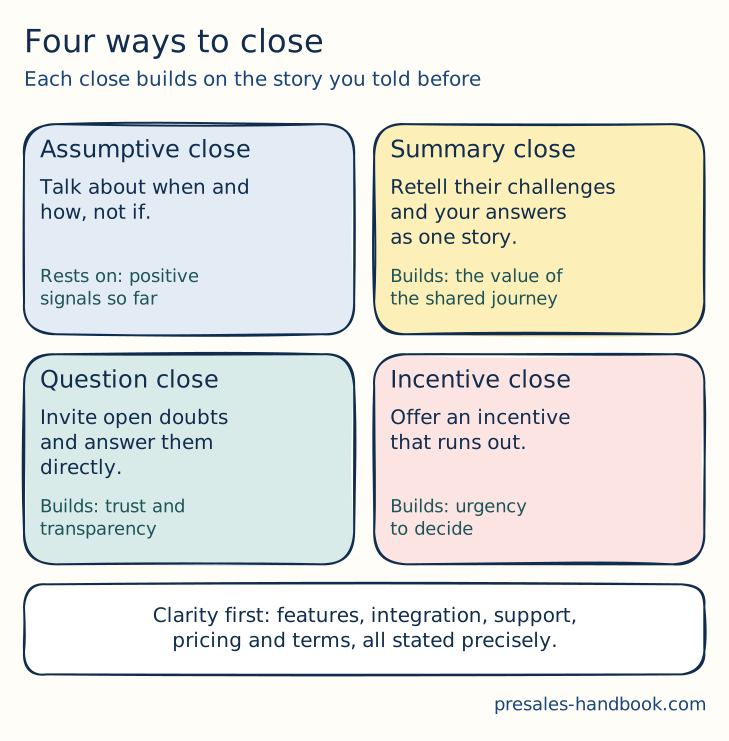
One technique is the Assumptive Close. The conversation moves from "if" to "when" and "how". That quietly suggests the purchase is already decided. The method builds on the positive interactions and signals from the sales process so far. It helps the prospect picture the solution as part of their future.
The Summary Close brings the story to its high point. It connects the customer's challenges with the proposed solutions and shows the change they lead to. It stresses the path you took together and the impact the solution has on the customer's problems. This confirms the value proposition and the better state the customer is aiming for.
With the Question Close, you invite the prospect to voice any hesitation or concern openly. That creates openness and trust. With this technique you can deal with remaining doubts directly, which gives the partnership a solid base.
Finally, the Incentive Close adds urgency to the decision, as limited-time offers do in retail. You offer an incentive with a deadline. That encourages the prospect to decide quickly and use the offer before it runs out.
Relationship Beyond the Close
After the sale, the work on the relationship begins, and the commitment gets deeper. Good presales people see the sale as the start of a long partnership that keeps developing. This starts with a clean handover from presales to post-sales. Think of a relay race where the baton passes without losing speed. What the sales process promised now has to become a working implementation. Throughout, the customer should feel supported and valued.
As the customer starts to use the solution, you connect the earlier discussions with their current needs. You stay a useful contact for technical questions. This continuity keeps the customer confident and supported while they build the product into their operations.
After the handover, the actual relationship work begins. Regular contact and communication matter most. Ask the customer for feedback regularly. That shows you how satisfied they are, and you can fix problems quickly. These check-ins show that you stay involved and want the customer to succeed. Positive feedback confirms what works. Constructive criticism shows you what to improve.
From the blog
- 5 min read
What PreSales Can Learn from The Wolf of Wall Street
The Wolf of Wall Street is about bad ethics, but also about storytelling and conviction. What presales can take from it and what to leave.
Read more - 2 min read
Buyers Don’t Hate Salespeople! They Hate Being Sold To
Buyers want guidance, not pressure. How sales and presales can help buyers decide instead of pushing them toward a signature.
Read more - 4 min read
Navigating Competition in the SaaS Landscape: The Battle Beyond Rivals
Your toughest competitor is often doing nothing. How to position against inertia and rivals, and how to read a competitive market.
Read more