
AI
How AI changed my work as a solution consultant
AI moved my constraint from back-office work to client time. Here is why I now draft PRDs from client input and where you can start with one task.
AI changed my work as a solution consultant (opens in a new tab) more than any tool before it. I learned what GitHub and DNS are, built my own AI harness and now write PRDs and specs from client input. The constraint in my week moved from back-office work to client time. Some days I feel more like a developer than an SC.
What I learned without planning to
A year ago, GitHub was something our developers used, and DNS was a word I nodded at in IT calls. Today this website runs from a GitHub repository, and I moved its domain and its mail myself. I also built a publishing pipeline. It checks every post against my style rules and sends me a review mail before anything goes live. That is how far the distance between an idea and a working result has shrunk. If building is this cheap, it belongs in the SC toolbox.
From hand-over to the build flow
In the handbook I called PreSales the link between the product teams and the voice of the market. For years that link was a document. In my teams, it was the Opportunity Scoping Document (opens in a new tab). Before we had it, Product Management and Professional Services kept coming back with questions about missing details.
AI moves that link one step further. From the same client input I now draft a first PRD or a technical spec in an afternoon. It shows the data flow, lists the open questions and marks every assumption as one. Product and development still decide. They just start from a document that already speaks their language. My rule for this has four words: AI drafts, you own. Nothing that amounts to a promise leaves my desk without a human name on it. I no longer hand over and step back. I build along, close to the people who ship.
The constraint moved
Theory of Constraints taught me to look for the one thing that limits the whole system. For years my constraint was back-office time. Summaries, hand-over notes, demo scripts and presentations ate my evenings. Claude now writes the first draft of all of them. I review it and add what only I know about the client. If the drafts take minutes instead of hours, the time goes back to the client. That is where it creates value. My effort was never the value. The client's outcome is. Parts of the old job are gone, and nobody misses them. What matters is what you do with the hours they freed. For me, that means understanding the client's market.
Why I sometimes feel like a developer
Scaling as an SC used to mean longer days. Now it means automation: I write small scripts, connect tools and test a workflow before I trust it. Some weeks I spend more time in a terminal than in a slide deck, and that still surprises me. It is also why I can support more deals without lowering the quality.
Where to start
Pick one recurring task, such as the summary after a discovery call, and let AI draft it for a month. Want ready-made workflows? My free AI PreSales Skills plugin for Claude (opens in a new tab) applies the handbook's method. It builds call plans, demo storyboards, ROI (opens in a new tab) cases and first RFP (opens in a new tab) answers. The AI toolkit chapter (opens in a new tab) covers the basics, and the future of presales (opens in a new tab) shows where the role is going.
About the author
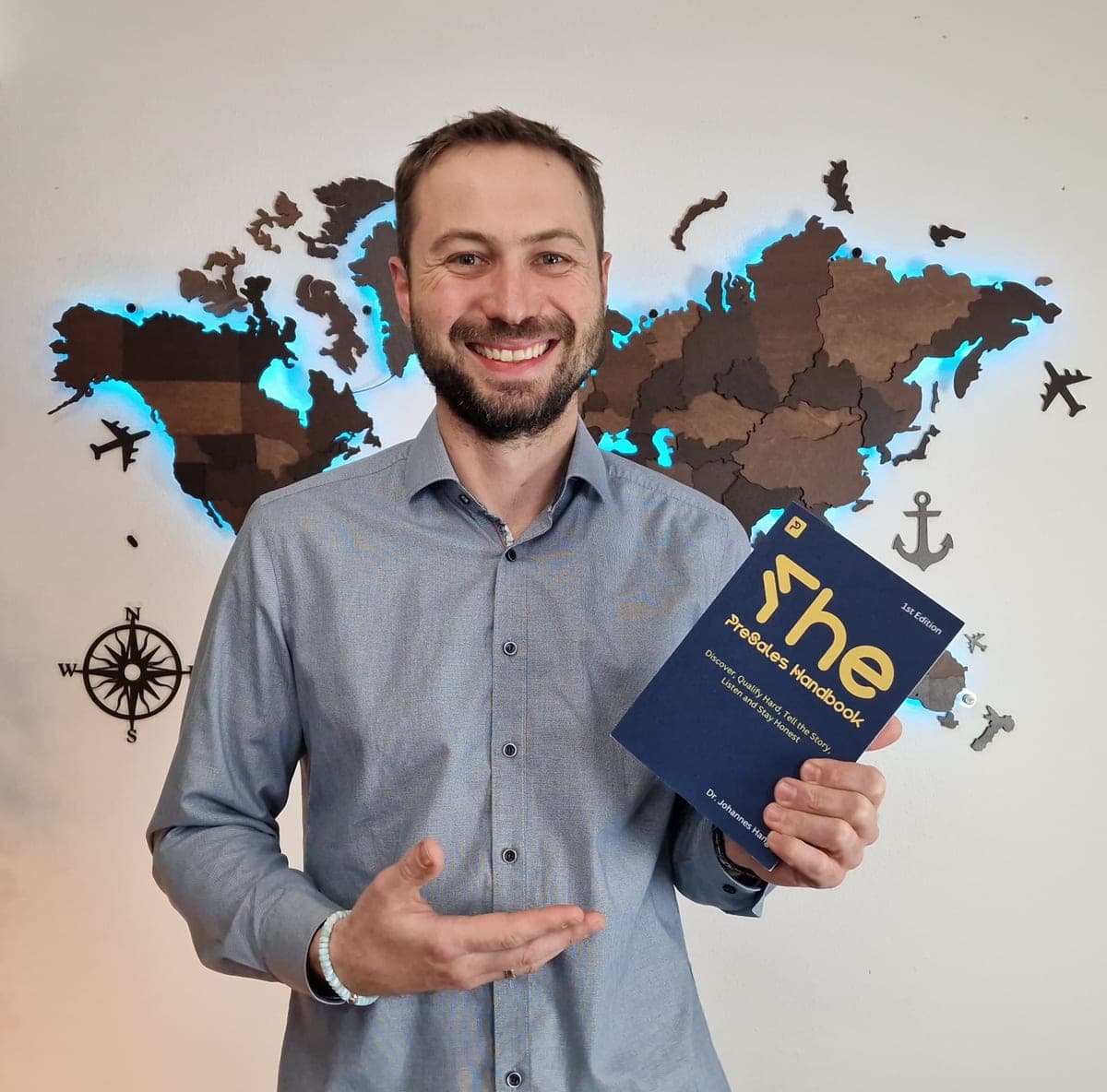
Dr. Johannes Hangl
Presales leader with more than a decade in B2B software. I write about what works in real deals: discovery, demos and the people side of selling.
Related handbook chapters
- The PreSales Consultant: Role, Skills and ResponsibilitiesSelling journey
- Close Won / Close Lost Lessons learnedPlaybook
- PreSales LeadershipCareer and leadership