
Selling journey · Chapter 3
Buying Journey
How B2B buyers move from awareness to renewal, what they need at each stage, and where presales can help them decide with confidence.
High-level View of Buying Journey
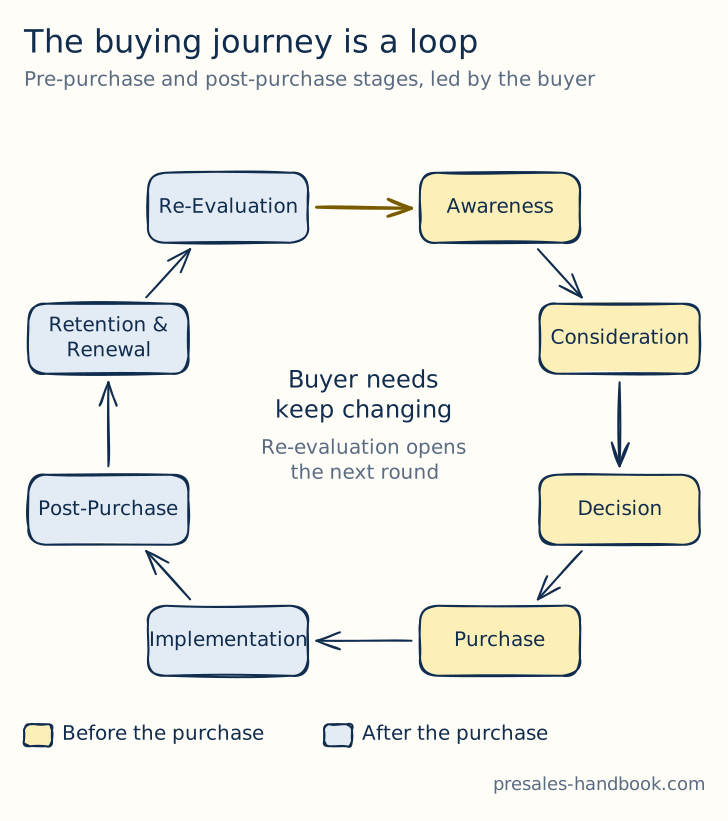
The buying journey is a loop. Re-evaluation starts the next round.
| Awareness | Consideration | Decision | Purchase | Implementation | Post-Purchase | Retention & Renewal | Re-Evaluation |
|---|---|---|---|---|---|---|---|
| The buyer recognizes a need and the seller generates awareness about their offerings. | The buyer researches potential solutions and the seller positions their offering as a potential solution. | The buyer evaluates different options and the seller differentiates their offering. | The buyer makes a buying decision and the seller facilitates the purchase process. | The company undergoes an onboarding process and integrates the software with other systems. | The buyer seeks to maximize value from the purchase and the seller offers post-sales support. | Vendors check in periodically and discuss renewals before the end of a subscription period. | The buyer's needs evolve and they explore newer solutions in the market. |
Awareness
Client: Recognizes a need or problem but may not be able to put it into words yet.
Seller: Makes the offering known, usually through marketing and outreach.
Problem or Need Recognition: Potential clients realize they have a problem or need that software could solve.
Initial Research: The client looks for general information about solutions to the problem.
Consideration
Client: Starts researching possible solutions to the problem.
Seller: Positions the offering as one possible solution. This often means educational content, webinars or product demos.
Evaluation of Options: Prospects look at different SaaS solutions and vendors that might meet their needs.
Engagement: Prospects read or watch webinars, case studies, whitepapers, product demos or client reviews. This helps them understand the features and benefits of each solution.
Free Trial or Pilot: Many SaaS companies offer trials or pilots, so potential clients can test the product themselves.
Decision
Client: Compares the options and gets close to a purchase decision.
Seller: Sets the offering apart, shows what makes it different and answers the remaining concerns or objections.
Further Investigation: Prospects often want more detail on integration, scalability, security features and customization.
Vendor Comparisons: Prospects compare the shortlisted options on price, features, client support and user reviews.
Engagement with Sales: Prospects contact sales for tailored demos, price negotiations and answers to specific questions.
Purchase Decision: The client makes the final decision and buys. This can include formal steps such as signing the contract and the first setup.
Purchase
Client: Makes the buying decision and completes the transaction.
Seller: Runs the purchase process so the move from prospect to client goes smoothly.
Implementation
Client: Takes an active part in onboarding. The client gives access and the data needed for integration, and attends tailored training. The client's own IT team checks compatibility and helps test the integration.
Seller: Helps connect the software to the client's existing tools and systems. The seller migrates data and configures the software for the client's needs. The seller also trains users and gives ongoing technical support when setup or integration runs into problems.
Onboarding: After the purchase, the company goes through onboarding. That includes training, data migration and software setup.
Integration: The software may need to connect to other tools or systems the company uses.
Post-Purchase
Client: Wants to get the most out of the purchase and may need support or extra resources.
Seller: Offers post-sales support, asks for feedback and builds the relationship. That can lead to upsells or referrals.
Adoption: Users in the organization start using the software in their daily work.
Support: Companies ask for help with support issues, feature questions or technical problems.
Feedback and Reviews: Some clients give feedback, which helps vendors improve their products and services.
Expansion/Upsell: Over time, companies may upgrade their plan, buy more features or roll the software out to other departments.
Advocacy: Satisfied clients often recommend the software to peers or give testimonials.
Retention & Renewal
Periodic Check-ins: Vendors check in from time to time to make sure everything runs smoothly and to deal with any concerns.
Renewal Discussions: Before the subscription period ends, both sides discuss the renewal, possible discounts or contract changes.
Re-evaluation
Needs Change: As a company grows or its needs change, the current SaaS solution may stop being good enough.
Market Exploration: Companies look at newer solutions or updates on the market that fit their new needs better.
Buyer Personas
SaaS deals involve many people, and each one buys for different reasons. Here is a summary of each persona and how to work with them during the buying process:
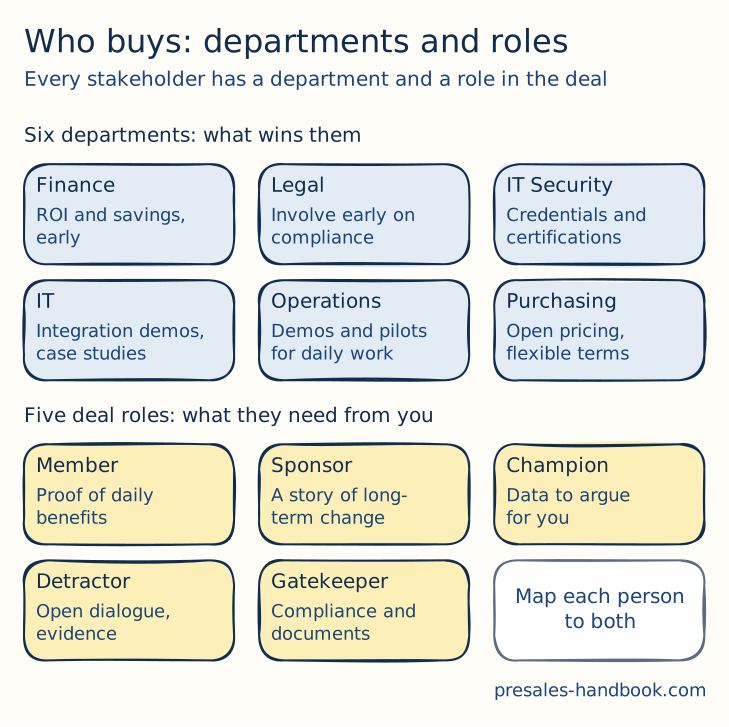
Finance: Checks the Numbers
Goal: Make sure the solution fits the company's financial goals.
Strategy: Show a clear ROI (opens in a new tab), cost savings and financial benefits early to win their support.
Legal: Checks Compliance
Goal: Make sure contracts and solutions comply with the relevant laws and regulations.
Strategy: Involve Legal early. That way you clear legal concerns up front and speed up the approval.
IT Security: Protects the Company
Goal: Protect the company from cybersecurity threats.
Strategy: Show your security credentials and compliance certifications to build trust.
IT: Makes It Fit
Goal: Make sure the solution works with the existing technology.
Strategy: Show how the integration works and share case studies where it worked.
Operations: Runs the Daily Work
Goal: Understand how the solution changes day-to-day operations.
Strategy: Offer demos and pilots that show the practical benefits.
Purchasing: Negotiates the Terms
Goal: Get the best terms and conditions for the company.
Strategy: Be open about pricing and flexible on terms and conditions.
The Member: Wants Daily Benefits
Goal: Find concrete benefits that make daily tasks easier.
Strategy: Prove the value with demos and case studies.
The Sponsor: Wants a Vision
Goal: Find solutions that fit the company's future goals.
Strategy: Tell a story that shows what will change in the long run.
The Champion (opens in a new tab): Argues for You Inside
Goal: Push for your solution within the organization.
Strategy: Give them detailed information and data to back your solution.
The Detractor: Needs Proof
Goal: Overcome their objections and win their support.
Strategy: Talk openly about their concerns and answer with evidence.
The Gatekeeper: Guards the Procedure
Goal: Make sure the purchase follows company rules.
Strategy: Get compliance, protocols and documentation right to make the process easier.
Selling Journey
The first conversation between a seller and a potential buyer matters a lot. It shapes the first impression and sets up a relationship that works for both sides. It is also the best moment to share how your company sells.
You also need to understand how the buyer buys. When both sides share their process, they agree from the start. That avoids misunderstandings. It also gives you a plan that respects the needs, limits and timelines of both sides.
Below is an example of a Selling Journey (opens in a new tab). It shows how this exchange can play out and how it shapes the sales process. Be open about your process, understand theirs, and agree on the steps from the first call. Then the complexity of SaaS sales becomes easier to handle.
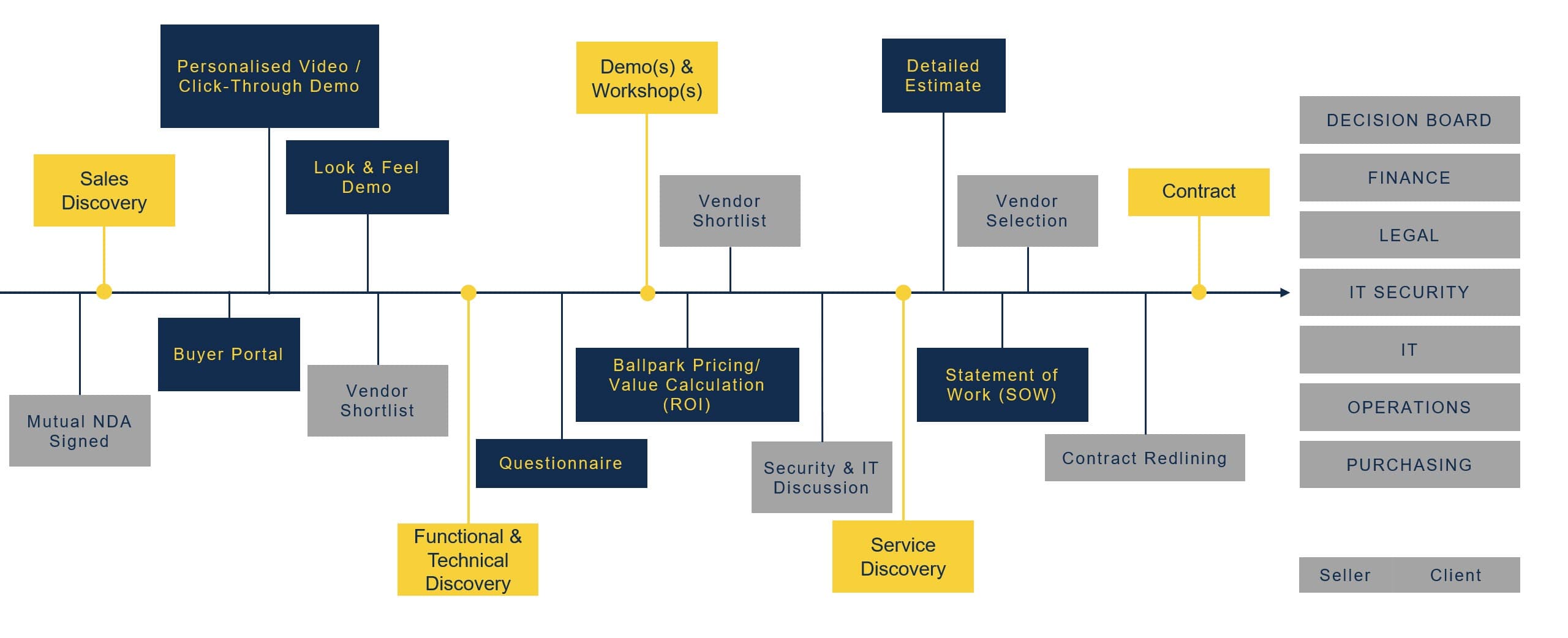
Example of a client-facing selling journey.
Templates for this chapter
 Included with the coursePPTX · 2.7 MB
Buying and selling journey
Both journeys side by side, stage by stage. Share it with your client to agree who does what.
From the blog
- 5 min read
The Power of Curiosity in PreSales: Why It’s Your Greatest Asset
Curiosity drives better discovery, stronger relationships, sharper demos and calmer objection handling. Why it is a core presales skill.
Read more - 5 min read
Why Salespeople Need PreSales Skills and How to Acquire Them
Salespeople who learn presales skills win more trust and more deals. Which skills matter most and how to learn them.
Read more - 2 min read
Buyers Don’t Hate Salespeople! They Hate Being Sold To
Buyers want guidance, not pressure. How sales and presales can help buyers decide instead of pushing them toward a signature.
Read more
In the course
- Functional & Technical DiscoveryMembers only
- Functional & Technical Discovery Best PractisesMembers only
- The Discovery Summary / Opportunity Scoping Document (OSD)Members only